Asset Integrity Management Systems (AIMS)
We build the ISO 55001 and Energy Institute enterprise framework that integrates risk based inspection, reliability centered maintenance, integrity operating windows and Safety Critical Element management
Asset Integrity Management
Systems (AIMS)
An asset integrity management system provides the enterprise framework that integrates risk based inspection, reliability centered maintenance, integrity operating windows, Safety Critical Element management and mechanical integrity programmes into a single governance system. The ISO 55000, 55001 and 55002 asset management series, originally PAS 55 and internationalised in 2014, provides the management system shell, while the Energy Institute Asset Integrity Management Toolkit, the OGUK Asset Integrity Guidelines and Norwegian Oil and Gas Guideline 117 provide industry specific depth. Mature implementations span twenty to thirty elements covering policy, leadership, hazard identification, risk assessment, lifecycle planning, management of change, competence management, contractor management, leading indicators, anomaly response, learning capture, audit and continuous improvement. The 2018 OGUK lifecycle framework remains the most referenced practical model in oil and gas, and CCPS Risk Based Process Safety provides the equivalent for downstream, petrochemical and specialty chemicals.
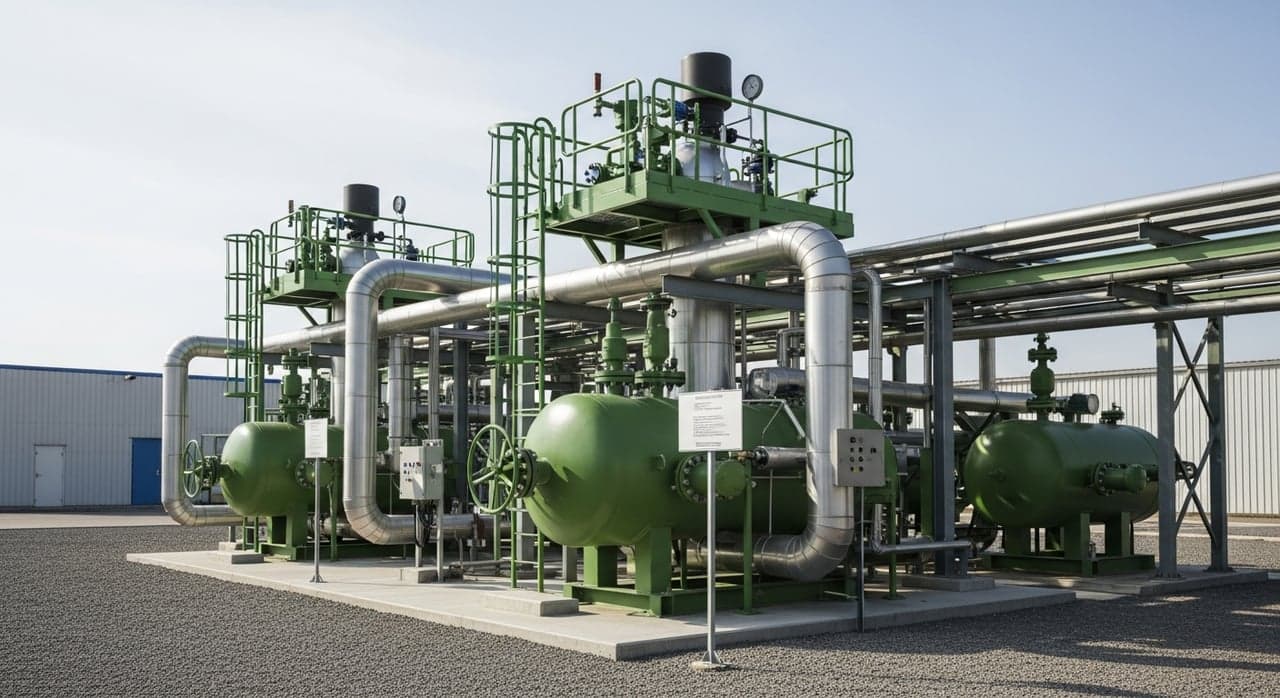
Asset Integrity Management Systems (AIMS) workflow
Define AIMS scope covering full asset lifecycle, concept, design, procurement, construction, commissioning, operations, maintenance, decommissioning, align with ISO 55000 (Asset Management) / 55001 / 55002, benchmark against IAM (Institute of Asset Management) competency framework.
Build comprehensive asset register with hierarchy (site → unit → system → equipment → component), align with ISO 14224 taxonomy, populate criticality ranking per safety / environment / operations / business consequence.
Integrate API 510 / 570 / 653 inspection programmes, RCM maintenance strategies, RBI prioritisation, PdM monitoring, and FFS triggering, specify the CMMS or EAM platform of record, align with MOC and PHA revalidation triggers.
Design KPI framework, leading (inspection compliance, MOC closure, training currency) and lagging (failure rate, mean time between failure, OEE, regulatory citation), specify monthly site / quarterly corporate reporting cadence.
Build AIMS competency matrix per role (inspection engineer, reliability engineer, materials specialist, FFS specialist), align with API certification (API 510 / 570 / 653 / 580), specify training plan and CPD requirement.
Establish annual AIMS self audit and triennial independent audit, align with corporate HSE / engineering governance, integrate with CCPS RBPS Asset Integrity element and ISO 55001 management review, capture continuous improvement findings.
Every deliverable from basis to handover
Complete Asset Integrity Management Systems (AIMS) scope covering every calculation, drawing, specification, and construction support activity.
Outcomes of Asset Integrity Management Systems (AIMS)
- We reduce loss of containment frequency through systematic Safety Critical Element assurance
- We address the integrity management gaps cited in the Buncefield, Texas City and Macondo CSB findings
- We drive anomaly response discipline that prevents escalation
- We anchor operational integrity across multi asset portfolios
- We deliver a framework ready for ISO 55001 certification
- We align with UK HSE KP4 Safety Critical Element management expectations
- We give you documentation that withstands OGUK, NCS and DGH offshore regulator scrutiny
- We provide insurer grade evidence of integrity management maturity
- We improve equipment availability and reliability through an integrated programme
- We sharpen the coordination of inspection, maintenance and monitoring
- We build an anomaly learning culture across multi site groups
- We standardise integrity management across merger and acquisition integration
- We defer major capital through documented life extension
- We optimise inspection and maintenance spend, typically by fifteen to twenty five per cent in a mature system
- We reduce unplanned outage and business interruption cost
- We support insurer dialogue with auditable maturity evidence
Codes & standards we work to
Triggers that signal the need
Where Asset Integrity Management Systems (AIMS) applies
Tangible deliverables
- AIMS framework document aligned to ISO 55001
- Safety Critical Element register and performance standards
- Integration matrix for risk based inspection, reliability centered maintenance, integrity operating windows and mechanical integrity
- Anomaly management workflow
- KPI dashboard to API RP 754 and OGUK Tier 1 through 4
- Governance framework with accountable executives
- Audit programme to ISO 19011
- Competence and contractor management interfaces
- Management review pack template
Send us the scope
We will scope Asset Integrity Management Systems (AIMS) against your site and come back with what it would take. Send us the process conditions, the equipment list and the stage the design has reached.