Skip to content
Digital Tools and Software

Hazard study environment

PHAx

Process Hazard Analysis Software

Sit in on a study demonstration
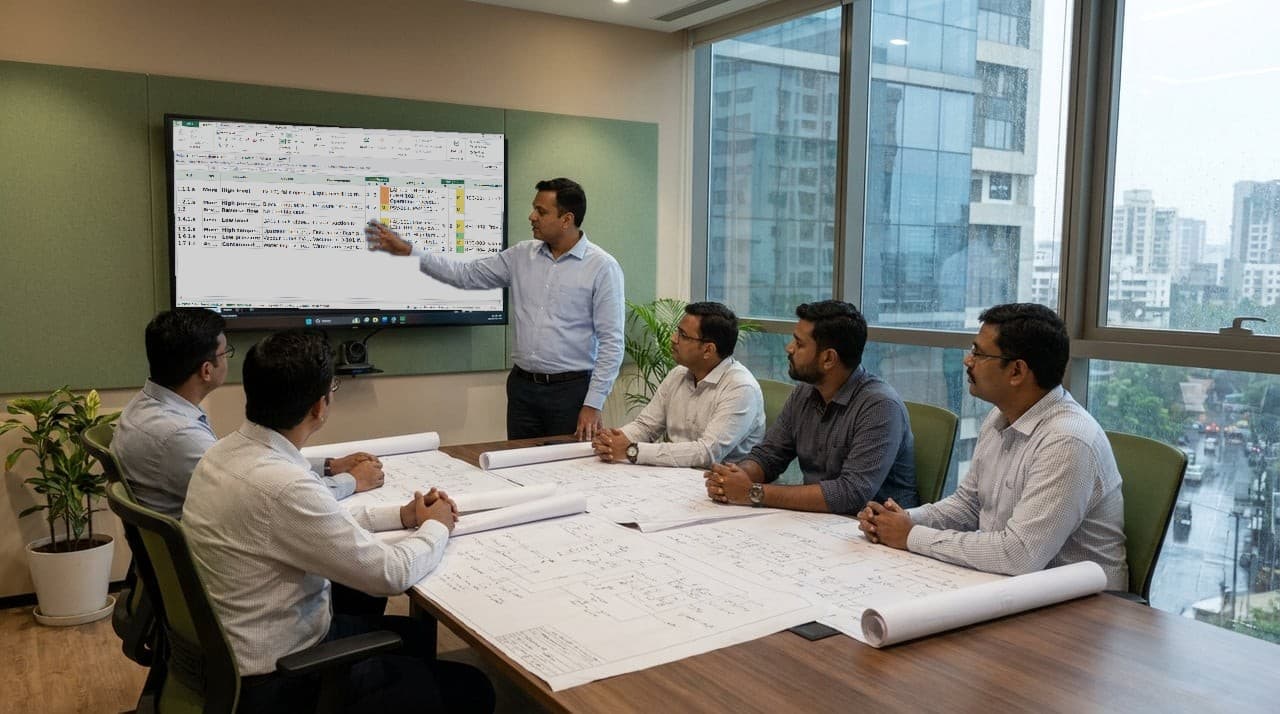
A hazard study session in progress, the chair working a node at a wall display while the team follows on printed drawings

We chair studies and we build the software, so it records the way a study actually runs

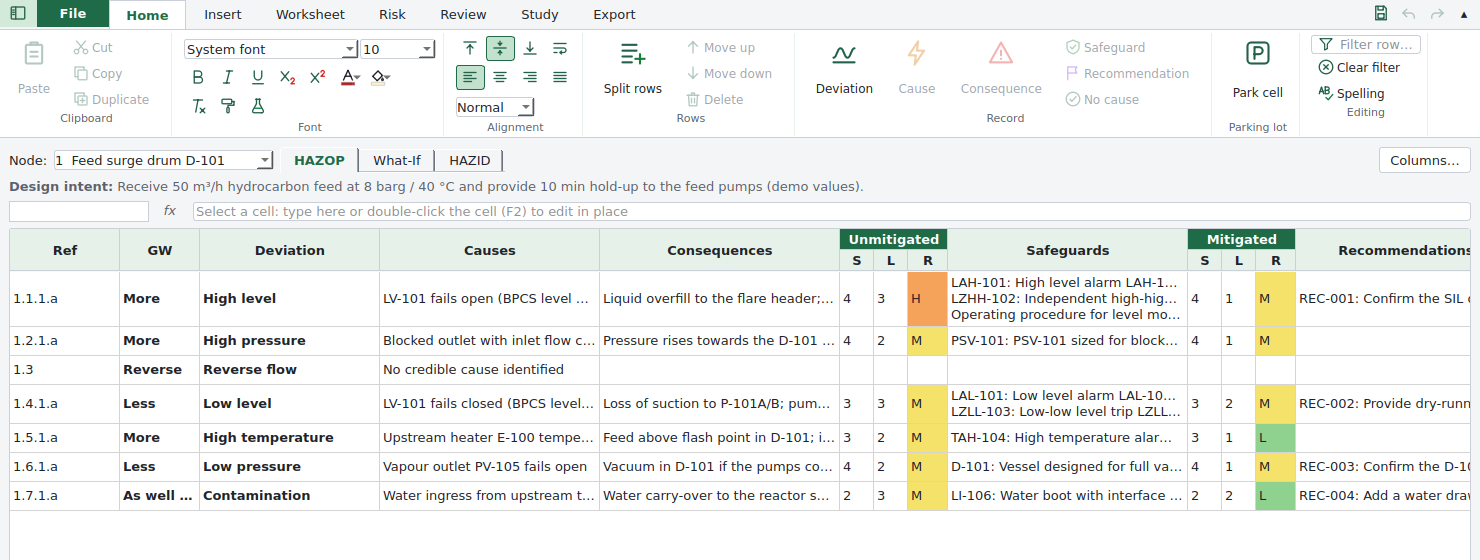
We chair hazard studies and we write the recording model, so what the software asks for is what a facilitator needs to capture at the moment it is said. The model follows the discussion rather than routing it into a fixed set of fields, which keeps the study file current with the room and legible when it is reopened years later.

Study workflow

The record stays continuous from drawing revision through to closed action. Revalidation therefore works from the delta instead of repeating the original sweep.

Basis and node definition

Carries forwardnode set bound to a drawing revision

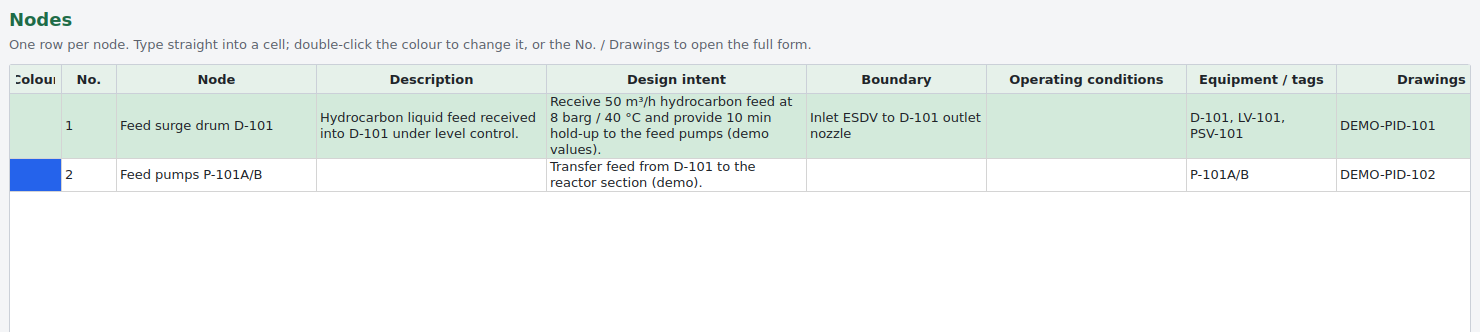
Study boundary bound to a named P&ID revision with the line list and stream data attached. Nodes segmented by design intent and hydraulic continuity, not by drawing sheet. Sheet based nodes are how studies end up oversized.

Deviation generation

Carries forwarddeviation matrix, fully swept

Systematic guide word to parameter sweep under IEC 61882, extensible to batch, transient and startup modes where a steady state matrix would leave the operating envelope unexamined.

Cause and consequence

Carries forwardseverity ranked against a stated worst case

Causes and consequences captured as discrete linked records, not narrative. Credible worst case is separated from maximum conceivable, so a severity rank states which of the two it was assigned against.

Safeguard qualification

Carries forwardcredited layers, unqualified ones struck

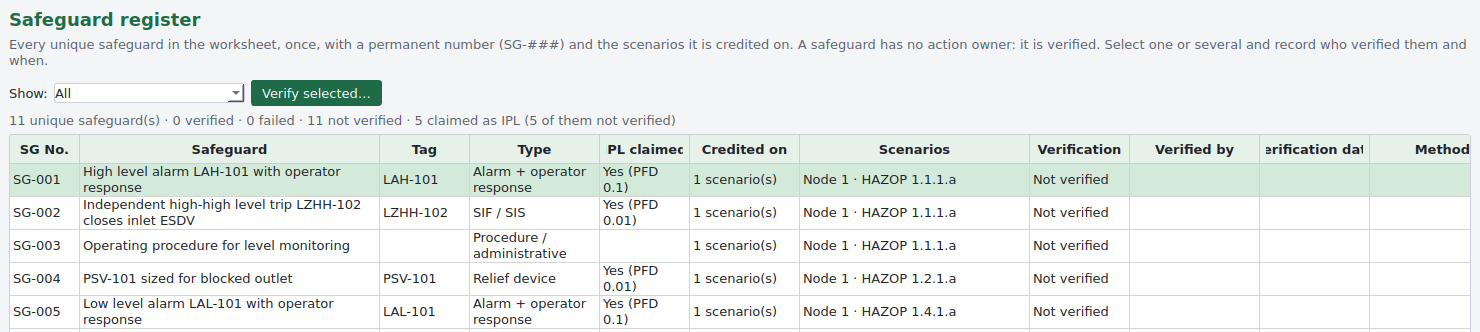
Each claimed safeguard tested for independence, specificity, dependability and auditability before it is admitted as a protection layer, so only protection that genuinely qualifies is credited.

Risk gap and LOPA

Carries forwardrequired risk reduction factor

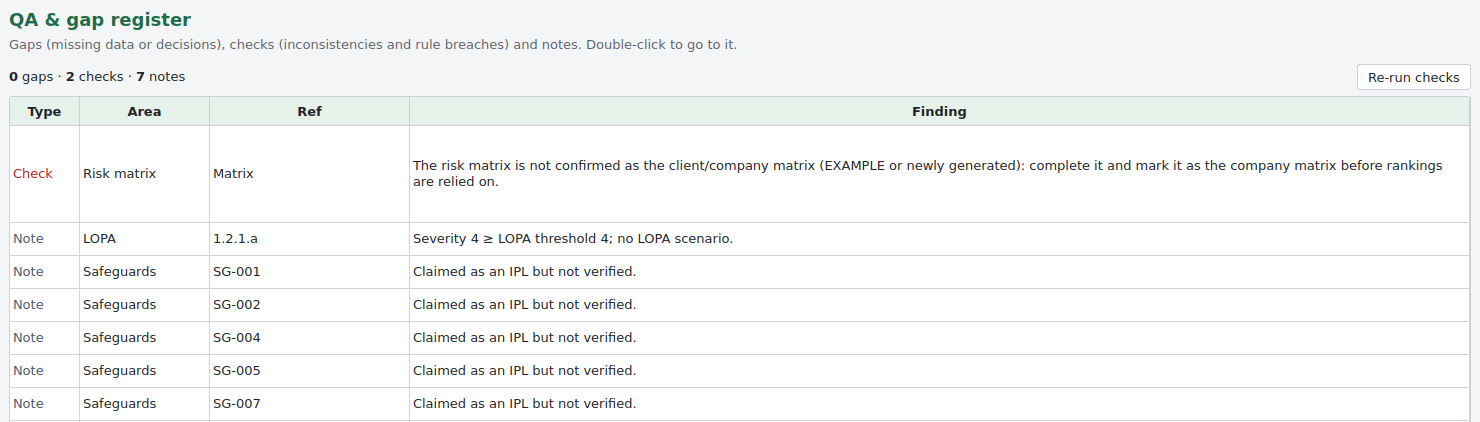
Initiating event frequency, enabling conditions and conditional modifiers resolve to residual risk. The required risk reduction factor carries forward into the safety requirements specification.

Recommendation and close out

Carries forwardaction on the corporate register

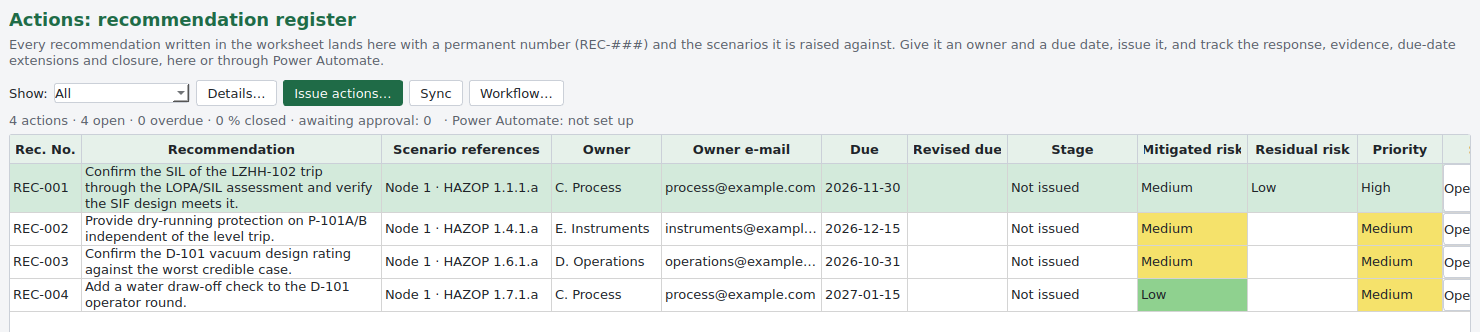
Actions raised against the originating deviation, classified by hierarchy of control, and exported to the corporate register with ownership and traceability to the scenario preserved.

One deviation, recorded properly

We keep a study searchable and revalidatable years after it closes. Each deviation is held as discrete linked fields rather than prose, so a reviewer can reach the cause, the safeguard or the action without rereading the study to find them.

FieldRecorded asWhy it is a field and not prose
Study basisP&ID A 214 rev 6, line list rev 3Bound to the revision the team actually worked from, so the basis can be established years later.
NodeFeed surge drum and downstream pump suctionSegmented by design intent and hydraulic continuity, not by drawing sheet.
Guide word and parameterNo / FlowSystematic sweep to IEC 61882, so coverage can be reported rather than assumed.
DeviationNo flow to pump suction during normal runningStated as a plant condition, not as a component failure.
CauseSuction strainer blinding by upstream foulingDiscrete linked record, so the same cause is searchable across every node.
ConsequencePump runs dry, seal failure, hydrocarbon release at gradeCredible worst case, kept separate from maximum conceivable.
SafeguardLow suction pressure alarm, operator response, low low tripEach tested for independence before it is credited as a layer.
Risk rankSeverity major, likelihood possible, before layersRanked on the same record, so the LOPA argument never drifts from the deviation.
ActionConfirm trip test interval supports the claimed integrityRaised against the cause and exported with owner and date intact.

Coverage is reported

Every guide word against every parameter, with the cells nobody reached still showing. A visible gap can be justified as out of scope or closed in a further session. An unreported gap leaves the study claiming coverage it does not have.

Assessed
worked and recorded
Finding
raised an action
Open
not yet reached
FlowPressureTempLevelCompoReaction
No
More
Less
Reverse
Part of
As well as
Other than

From deviation to required risk reduction

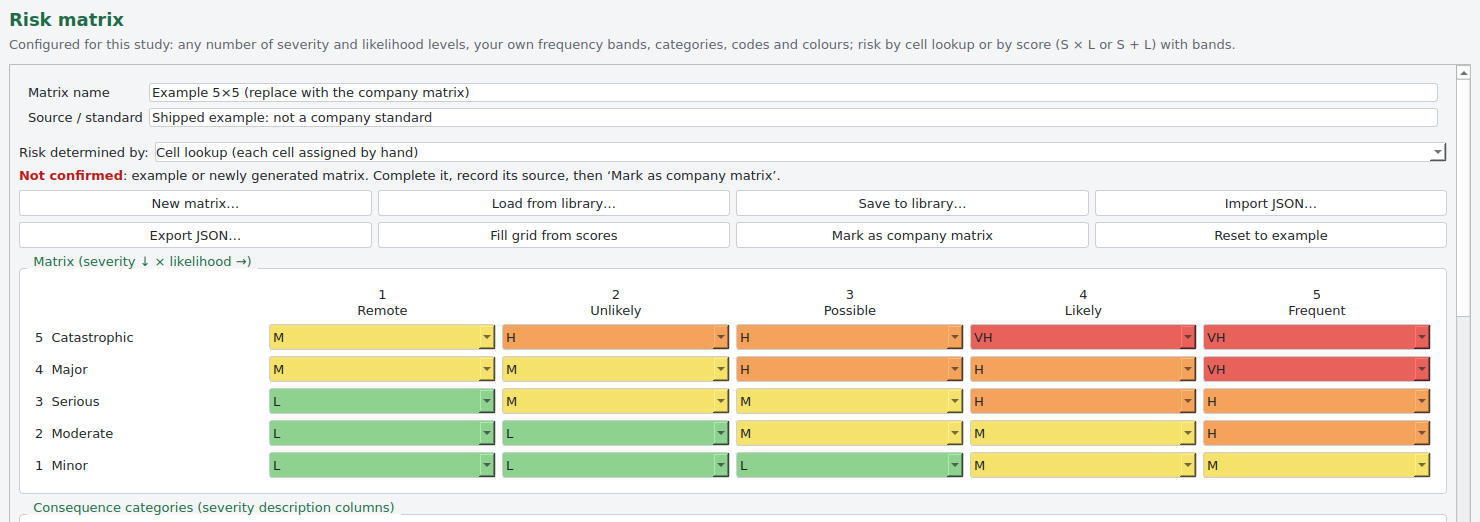
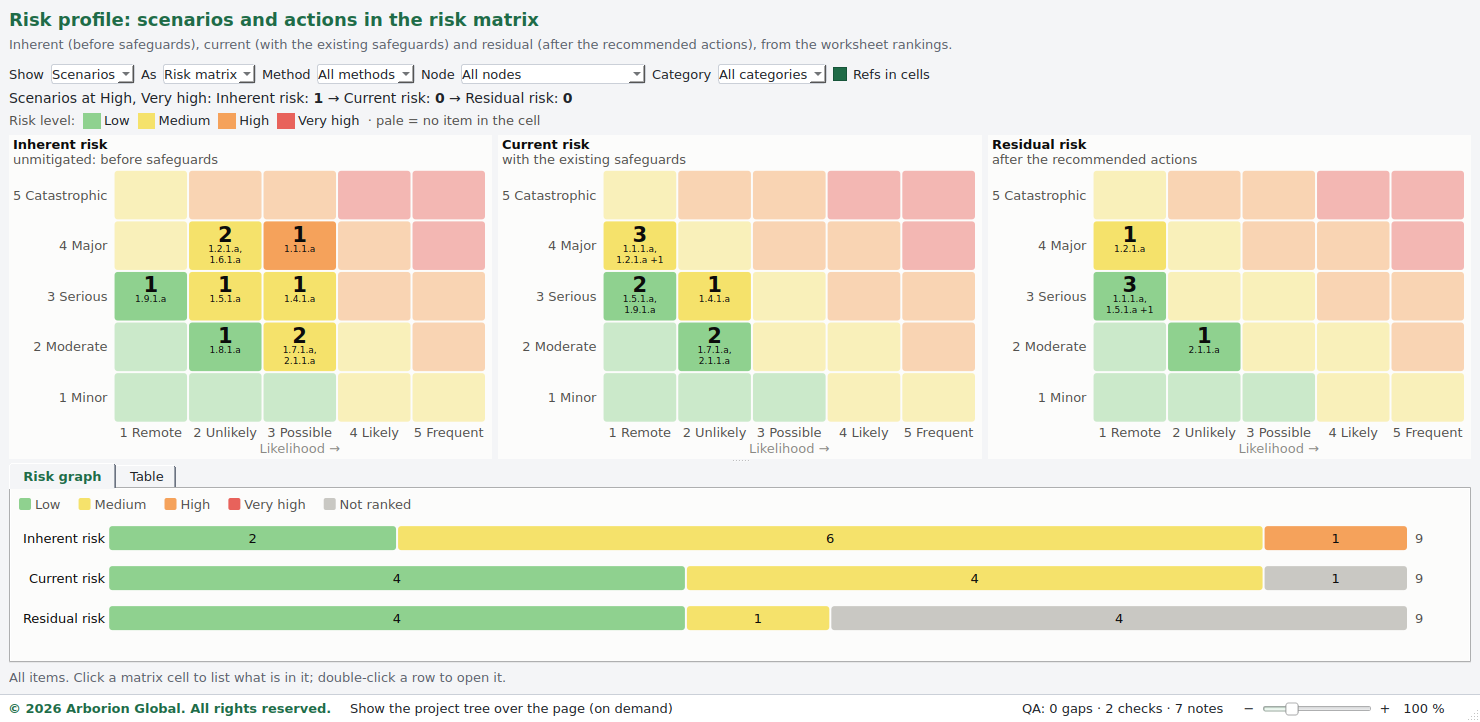
Risk ranking and layer credit sit on the same record as the deviation, not in a separate file. The number that leaves the study is the one the safety requirements specification needs.

Five by five risk matrix showing one deviation before and after credited protection layers
Severity does not move when a safeguard is credited. Only likelihood does, and only for layers that pass the independence test.
LOPA ladder stepping down from initiating event frequency through credited layers to residual risk against a tolerable frequency line
Each qualifying layer takes an order of magnitude off the frequency. What remains above the tolerable line is the gap the instrumented function has to close.

Built for the room

A study leader standing at a wall mounted drawing working a node with the team

The chair sets the pace

Recording keeps up with the discussion. Nobody waits for the scribe, and nothing is reconstructed from memory afterwards.

An engineer recording a study on a laptop with a printed drawing beside the keyboard

The scribe stays in the room

Rows fill as the team talks. Causes and safeguards attach to the deviation they belong to, not to a note at the end.

Two engineers comparing a marked up previous study against the current record on screen

Revalidation starts from the delta

The next cycle opens on what changed since the last one, so a five year revalidation costs a fraction of a repeat sweep.

Why it records the way it does

Shaped by studies, corrected by studies

Every awkwardness in the recording model was found by our own leaders and scribes in live sessions, not in a specification workshop. When a field slows a study down it gets changed, because we are the ones sitting in the room when it does.

The basis is fixed and cannot drift

A study is bound to the drawing revision it was actually worked from. If that revision is superseded the study does not silently follow it, so the basis it was worked from can always be established.

Coverage is reported, not assumed

The environment reports which parameter and guide word combinations were assessed and which were not. A gap that is visible can be justified or closed. A gap that is invisible becomes a finding for somebody else to make.

What it is not

PHAx records and structures a hazard study. It does not chair one. The quality of a study still rests on an independent competent leader, accurate drawings and a team willing to disagree with the design, and no software changes that.

Installation
Installed locally and suitable for closed plant networks with no outbound connectivity requirement.
Licensing
Named user or concurrent seat, with session licensing for a chair and scribe working one study file live.
Study migration
Existing worksheets imported where the source format permits, with node structure and action history preserved.
Interoperability
Report and action export into the corporate action register, and risk reduction output into the safety requirements specification.
Competency
Leader and scribe training covering node selection, recording discipline and the independent protection layer test.
Technical support
Supported by practising study leaders, so a method question is answered by someone who chairs studies.
Run your next study in PHAx

We will come back with the study duration, the facilitator and scribe it needs and what the licence and support would cost. Tell us the unit and the P&ID revision it sits at.

Arrange a session