Asset Integrity Management
We help you keep ageing equipment safe and productive through risk based inspection, reliability centred maintenance, corrosion management, fitness for service evaluation and pipeline integrity, so that your team can extend the working life of critical assets while staying ahead of the damage mechanisms that threaten them.
Why asset integrity management matters
Asset Integrity Management is the discipline that keeps ageing pressure equipment, pipelines, tanks and rotating assets fit for service and the regulator on side. Our team brings together API 580 and 581 risk based inspection, SAE JA1011 reliability centered maintenance, API 579 1 and ASME FFS 1 fitness for service, API RP 571 damage mechanism cataloguing, IBR 1950 for India and the PNGRB Pipeline Integrity Regulations into one asset integrity management system aligned with ISO 55001. The work converts inspection findings, integrity operating window excursions and corrosion data into run, repair or replace decisions that are defensible to your insurer, regulator and corporate engineering review.
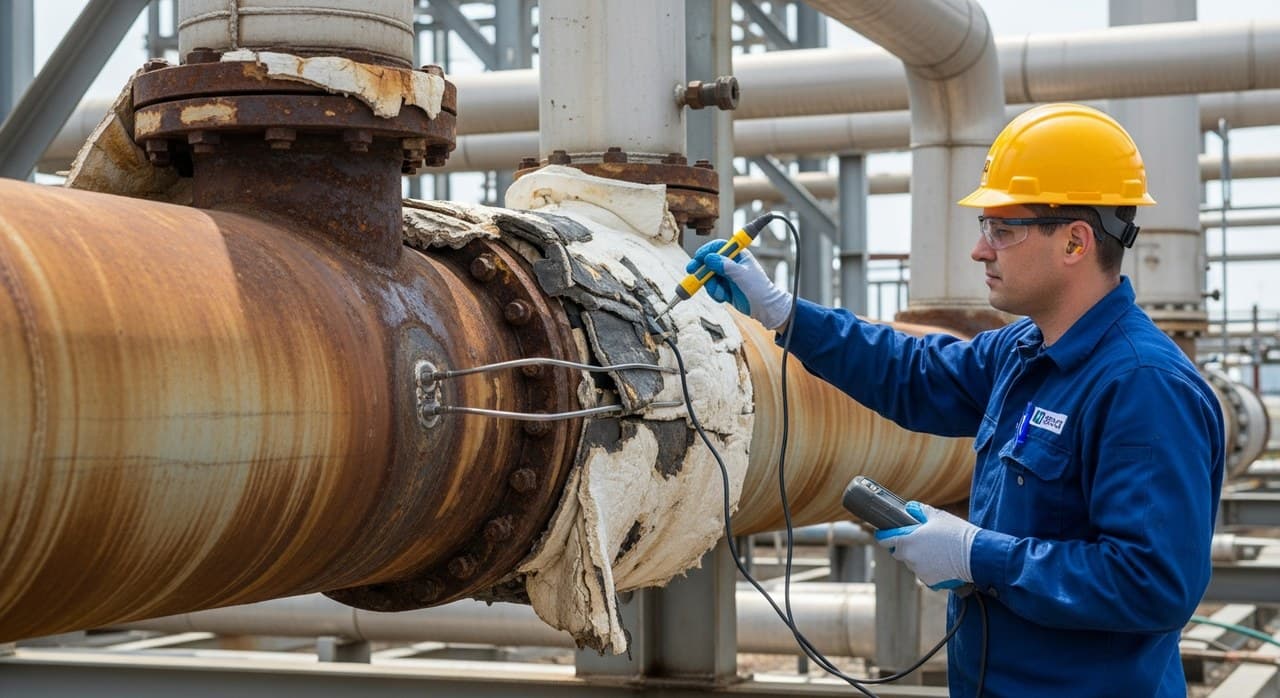
Asset Integrity Management capabilities
How we deliver
A phased, evidence led delivery model that runs from discovery through close out and is built around your facility, regulatory context, and lifecycle stage.
What this service delivers
- An RBI driven inspection programme that cuts unnecessary intervention by 30 to 50 percent
- Fitness for service based run, repair or replace decisions that stand up to the regulator
- Mechanical integrity and integrity operating window excursion management that prevents Tier 1 release events
- A predictive maintenance programme that converts reactive work into planned maintenance
- An asset integrity management evidence pack that closes OSHA PSM Mechanical Integrity audits
Our differentiators
- API 510, 570, 653 and 580 certified inspectors and engineers
- RBI, RCM and fitness for service integrated rather than run as three separate programmes
- PNGRB, IBR and OISD India regulatory grounding
- A failure analysis lab partnership that gives you evidence based root cause analysis
Related services
Our engineers deliver the code compliant safety engineering that keeps your process protected, covering relief systems, flare studies, fire protection, hazardous area classification, safety instrumented system design and alarm rationalisation so that every layer of protection on your facility is sound and well documented.
We engineer the high risk chemistry that most service providers will not touch, working through your reactive systems, thermal hazards, runaway scenarios and the physics of scale up so that you can take demanding processes from concept to commercial production with confidence that the hazards are properly controlled.
Our multi discipline team carries your project from concept through commissioning, bringing process, mechanical, electrical and instrumentation engineering together under one roof so that the design that reaches your site is coherent, buildable and ready to operate safely.
Standards we work to
Industries we serve
- Refineries and Petrochemicals
- Oil and Gas across Offshore, Onshore and Pipelines
- LNG, Cryogenic and Hydrogen
- Power and Combined Cycle Plants
- Specialty Chemicals and Pharma
- Fertilizer, Mining and Steel
Frequently asked questions
What is asset integrity management?
It is the discipline that keeps ageing pressure equipment, pipelines, tanks and rotating assets fit for service and the regulator on side. We bring risk based inspection, reliability centered maintenance, corrosion management, fitness for service evaluation and pipeline integrity into one management system aligned with ISO 55001, converting inspection findings and integrity operating window excursions into defensible run, repair or replace decisions.
Which standards and methods do you use?
We use API RP 580 and 581 for risk based inspection, API 579 1 and ASME FFS 1 for fitness for service, API RP 571 for damage mechanisms and API RP 584 for integrity operating windows, SAE JA1011 and JA1012 for reliability centered maintenance, ASME B31.8S and API 1160 for pipeline integrity, and ISO 55001 and ISO 14224 for asset management and reliability data. For India we apply OISD STD 130, the PNGRB Regulations 2009 and IBR 1950.
When does a facility need this?
You need it as equipment ages toward or beyond its original design life, when corrosion and damage mechanisms threaten containment, when an inspection backlog or unplanned failures point to reactive maintenance, or when an OSHA PSM mechanical integrity audit or insurer review requires demonstrable integrity evidence. A risk based approach concentrates inspection where the consequence and likelihood are highest rather than on a blanket time based schedule.
What outcomes do you deliver?
You receive a risk based inspection programme that can cut unnecessary intervention by a meaningful margin, fitness for service based run, repair or replace decisions that stand up to the regulator, integrity operating window management that prevents Tier 1 release events, a predictive maintenance programme that converts reactive work into planned work, and an evidence pack that closes OSHA PSM mechanical integrity audits.
Which industries do you serve?
We serve refineries and petrochemicals, oil and gas across offshore, onshore and pipelines, LNG, cryogenic and hydrogen, power and combined cycle plants, specialty chemicals and pharma, and fertilizer, mining and steel. Our inspectors and engineers hold API 510, 570, 653 and 580 certification.
Talk to us about asset integrity management.
We will come back with the scope, the standards it would be run to and what it would take. Tell us which part of asset integrity management you need and the site it applies to.