Predictive Maintenance and Remaining Life Assessment
We deliver connected condition monitoring, machine learning driven anomaly detection and remaining useful life prognostics for rotating and fixed equipment
Predictive Maintenance and Remaining
Life Assessment
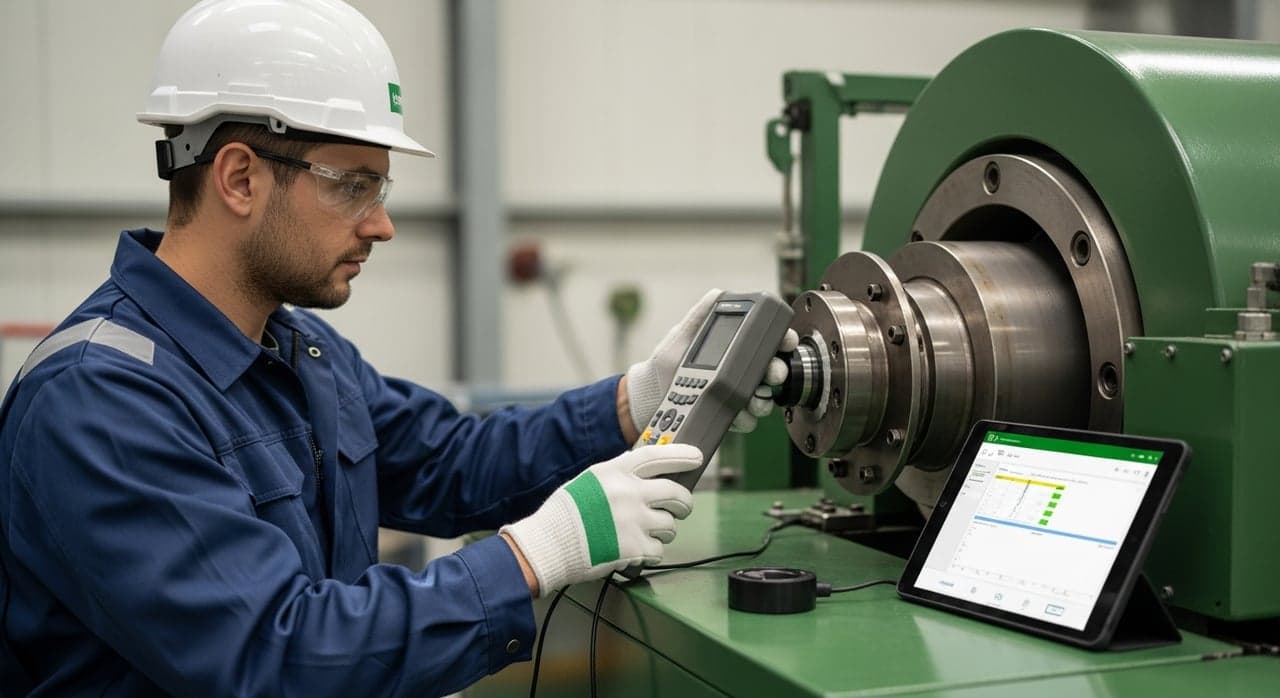
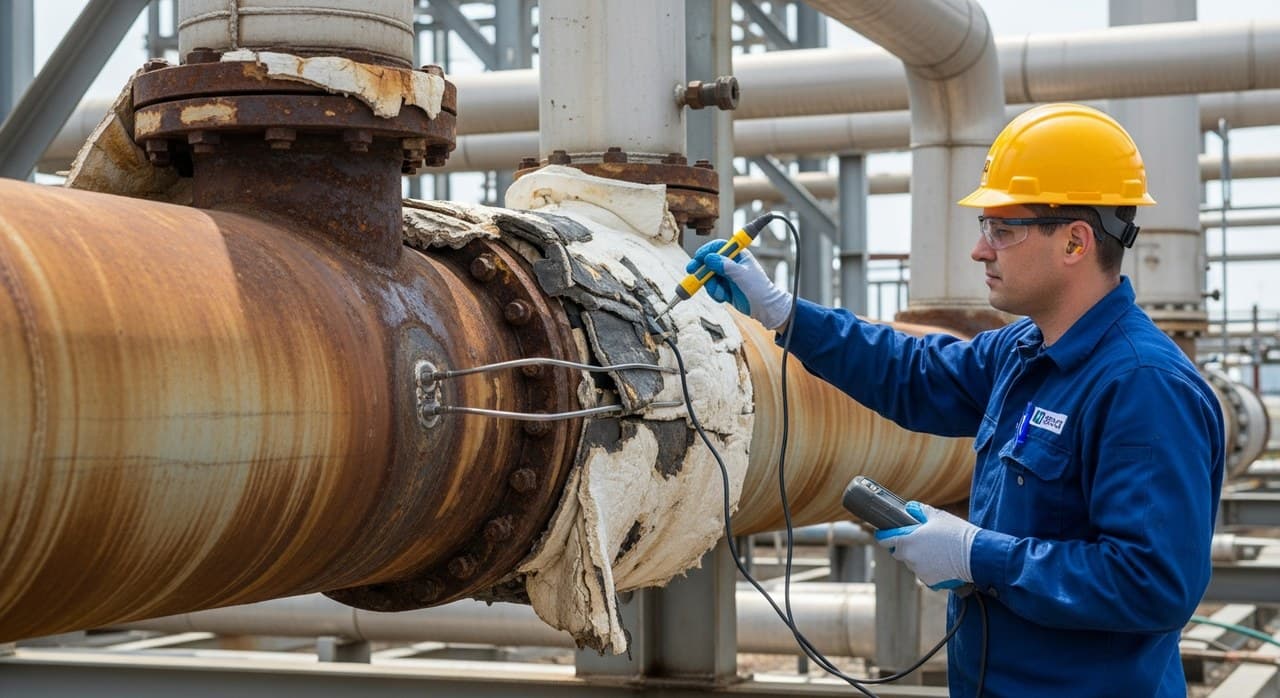
Predictive maintenance has moved from offline spectrum analysis on quarterly routes into continuous, machine learning driven anomaly detection on connected assets, what the ARC Advisory Group calls the fourth generation of predictive maintenance. Our team integrates vibration analysis to ISO 10816, ISO 7919 and API RP 670 machinery protection, oil condition monitoring to ASTM D7720 covering wear metal trends, ferrography, viscosity and total acid number, infrared thermography to ASTM E1934, ultrasonics for valve and steam trap leakage, motor current signature analysis for electrically driven equipment, and acoustic emission for pressure vessel and storage tank monitoring. We layer this with cloud and edge analytics on the platform your estate already runs, and increasingly with model assisted root cause synthesis. Remaining useful life prediction has become tractable through Bayesian degradation models, hidden Markov methods and recurrent neural networks trained on years of historical failure data, though the discipline remains highly asset specific and demands physics of failure understanding alongside data science.
Predictive Maintenance and Remaining Life Assessment workflow
Screen assets for PdM candidacy per ISO 17359, failure mode amenability to early detection signal, consequence severity, current maintenance cost, prioritise rotating equipment (pumps, compressors, turbines, motors) and static (heat exchangers, vessels).
Specify condition monitoring sensors, vibration (ISO 10816, API 670), oil analysis (ferrography, spectroscopy), thermography (IR camera), acoustic emission, motor current signature analysis, align with ISO 13374 condition monitoring framework.
Design data acquisition architecture, wired (4 to 20 mA, fieldbus) vs wireless (ISA100, WirelessHART), specify edge processing for FFT, envelope detection, peak hold, align with OT/IT architecture and IEC 62443 cybersecurity.
Develop Remaining Useful Life algorithm, physics based (degradation model), data driven (regression, ANN, LSTM), hybrid, train on historical failure data, validate with cross validation, specify confidence interval and prognostic horizon.
Integrate CBM alerts with CMMS (the CMMS of record) for automatic work order generation, specify operator / planner / reliability engineer workflow, align with RCM task hierarchy and PdM task replacement of PM task.
Establish PdM programme charter with KPIs, fault detection lead time, false positive rate, planned vs reactive ratio, cost savings, conduct annual programme review with maintenance leadership, align with ISO 55000 asset management.
Every deliverable from basis to handover
Complete Predictive Maintenance and Remaining Life Assessment scope covering every calculation, drawing, specification, and construction support activity.
Outcomes of Predictive Maintenance and Remaining Life Assessment
- We detect early stage failure on safety critical rotating and fixed equipment
- We reduce unplanned outage exposure on high consequence assets
- We anchor reliability centered maintenance task selection in condition based evidence
- We surface silent failure patterns on standby and emergency equipment
- We align with the ISO 13374, 17359 and 13381 data and prognostics standards
- We support API RP 670 machinery protection compliance
- We document an ISO 55000 condition based maintenance approach
- We provide insurer grade evidence of ageing asset condition
- We typically reduce unplanned downtime on covered assets by thirty to fifty per cent
- We sharpen spare parts planning with procurement driven by remaining useful life
- We reduce over maintenance by shifting scheduled overhauls to a condition based regime
- We build a data driven maintenance culture across operations and reliability
- We cut maintenance and spare parts cost by fifteen to twenty five per cent in mature programmes
- We defer major capital through documented life extension
- We improve overall equipment effectiveness, typically by two to five percentage points on heavy rotating assets
- We quantify business interruption exposure for your insurer to assess
Codes & standards we work to
Triggers that signal the need
Where Predictive Maintenance and Remaining Life Assessment applies
Tangible deliverables
- Asset criticality and coverage decision matrix
- Condition monitoring technology selection and instrumentation specification
- Data architecture and platform integration design
- Anomaly detection model specification
- Remaining useful life prognostic model where data permits
- Anomaly alert and work order workflow
- Maintenance and asset management system integration plan
- Predictive maintenance KPI and return on investment dashboard
Send us the scope
We will scope Predictive Maintenance and Remaining Life Assessment against your site and come back with what it would take. Send us the process conditions, the equipment list and the stage the design has reached.