Chemical Safety Evaluation & Testing
We generate the laboratory data your chemistry needs and we turn it into engineering decisions you can act on, covering thermal stability, calorimetry, dust explosibility, reactivity and flammability so that the real behaviour of your materials is understood before it ever reaches the plant.
Why chemical safety evaluation & testing matters
Chemical Safety Evaluation translates laboratory measurement into engineering decision. Thermal stability, calorimetric runaway profiles, dust explosibility across Kst, Pmax, MIE, MIT and LOC, flammability limits, reactivity screening and vent sizing data form the foundation under every credible hazard study, relief design and inherent safer design review. Our work brings together accredited testing through DSC, ARC, VSP2, the 20 L sphere and the ASTM and CEFIC protocols with engineering interpretation that converts the data into safe operating windows, MTSR limits and DIERS sized vent areas you can defend at FSA Stage 2 or after an incident.
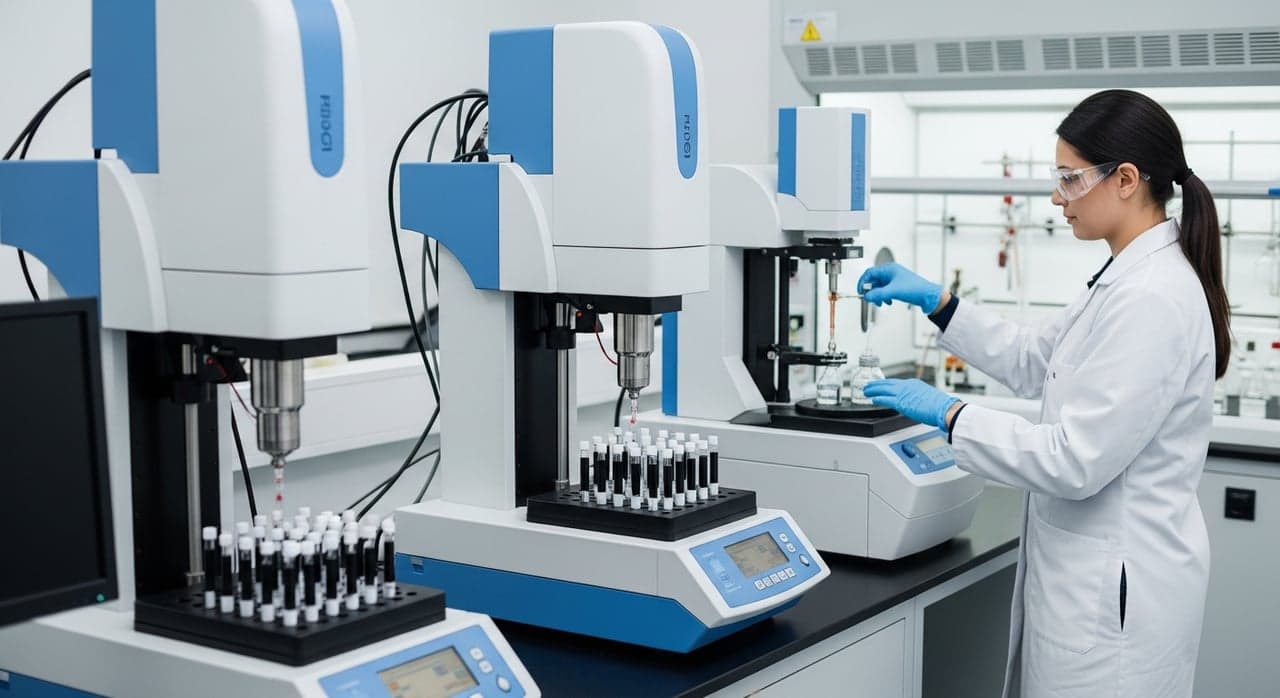
Chemical Safety Evaluation & Testing capabilities
How we deliver
A phased, evidence led delivery model that runs from discovery through close out and is built around your facility, regulatory context, and lifecycle stage.
What this service delivers
- A defensible thermal stability and runaway envelope mapped to the Stoessel class
- DIERS sized emergency vents with a clear engineering evidence trail
- Dust Hazard Analysis input that meets the NFPA 660 2024 requirements
- Hazardous area classification grounded in measured flammability data
- A scale up safety basis that holds up under FDA and EMA inspection
Our differentiators
- Accredited laboratory partnerships across an ISO IEC 17025 testing chain
- Engineering interpretation included rather than test reports alone
- Integration with HAZOP, LOPA and vent sizing in one workflow
- Multi jurisdiction labelling across GHS, India GSR 1132 and REACH
Related services
We design and deploy complete process safety management systems for your high hazard operations and we align them to the CCPS Risk Based Process Safety framework, OSHA PSM, Responsible Care and ISO 45001 so that safe operation becomes part of how your facility runs every day.
Our team runs the full range of qualitative and quantitative hazard studies for your facility, from HAZOP and SIL through LOPA, QRA, FERA and consequence modelling, so that you and your leadership can make risk decisions grounded in clear evidence rather than assumption.
We help your facility prepare for the worst day with response systems that actually hold under pressure, building your emergency response plans, incident command structure, command centre and drill programme together with business continuity planning so that your people know exactly what to do when it matters most.
Standards we work to
Industries we serve
- Specialty and Fine Chemicals
- Pharmaceuticals and API
- Polymers and Resins
- Food, Feed and Powder Handling
- Energetic Materials and Explosives
- Battery and Energy Storage
Frequently asked questions
What is chemical safety evaluation and testing?
It is the work that translates laboratory measurement into engineering decisions you can act on. We generate data on thermal stability, calorimetric runaway profiles, dust explosibility, flammability limits, reactivity and vent sizing, then interpret it into safe operating windows, MTSR limits and DIERS sized vent areas. The aim is that the real behaviour of your materials is understood before it ever reaches the plant.
What testing methods and standards underpin the work?
We use Differential Scanning Calorimetry and adiabatic calorimetry through ARC, VSP2 and Phi Tec, the 20 L sphere for dust and the ASTM and CEFIC protocols, working to standards including ASTM E537, E1226, E1981, E2079, D93 and E659, the AIChE DIERS vent sizing methodology, NFPA 660 for dust hazard analysis and the UN Manual of Tests and Criteria. Testing runs through accredited ISO IEC 17025 laboratory partners.
Why is this testing needed before scale up?
Runaway reactions, dust explosions and thermal instability are only credible once the measured behaviour of your chemistry is known, and literature values rarely capture your exact formulation or process conditions. Generating the data early gives you a defensible thermal stability and runaway envelope, correctly sized emergency vents and a scale up safety basis that holds up under FDA and EMA inspection, rather than discovering the hazard on the plant.
What deliverables come out of an evaluation?
You receive raw calorimetric and explosibility data, a Stoessel classification of the reaction hazard, calculated MTSR, TMR24 and SADT values, a defined safe operating window, DIERS vent sizing inputs and a control and inerting philosophy. We compile it into a Process Safety Information dossier that feeds directly into your HAZOP, LOPA and inherent safer design reviews.
Which sectors does this serve?
We serve specialty and fine chemicals, pharmaceuticals and API, polymers and resins, food, feed and powder handling, energetic materials and explosives, and battery and energy storage. Any process with reactive chemistry, combustible dust or thermally sensitive materials benefits from measured data rather than assumption.
Talk to us about chemical safety evaluation & testing.
We will come back with the scope, the standards it would be run to and what it would take. Tell us which part of chemical safety evaluation & testing you need and the site it applies to.