Hazard Studies & Risk Assessment
Our team runs the full range of qualitative and quantitative hazard studies for your facility, from HAZOP and SIL through LOPA, QRA, FERA and consequence modelling, so that you and your leadership can make risk decisions grounded in clear evidence rather than assumption.
Why hazard studies & risk assessment matters
Hazard Studies and Risk Assessment is the engine that turns complex process hazards into defensible, decision grade risk evidence. From IEC 61882 HAZOP at FEED through QRA, FERA, SIL allocation, LOPA, ALARP demonstration and post incident revalidation, our studies underpin every downstream investment, regulatory submission and operating decision you make. The work is anchored by certified facilitators, validated software under version control and an action traceability discipline that holds up through multi year close out cycles and statutory revalidation.
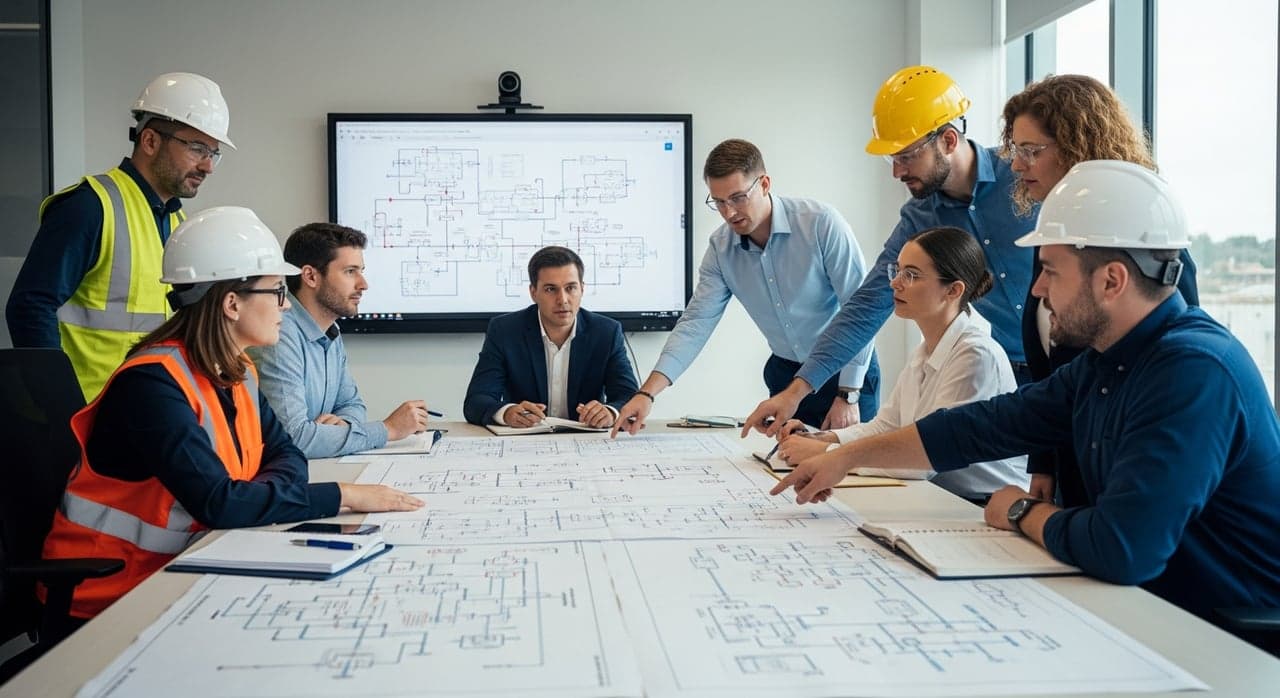
Hazard Studies & Risk Assessment capabilities
How we deliver
A phased, evidence led delivery model that runs from discovery through close out and is built around your facility, regulatory context, and lifecycle stage.
What this service delivers
- A risk ranked action register with a defensible trail for regulators and underwriters
- A SIL allocated SIF inventory handed off cleanly to functional safety engineering
- QRA evidence that supports permitting, insurance and project finance
- A Bow Tie barrier register that drives ongoing operational discipline
- A statutory five year revalidation framework integrated with your site MOC
Our differentiators
- Certified facilitators across every study type including HAZOP, SIL, LOPA, FERA, QRA and OBRA
- Validated workflows under version control end to end
- Integrated study sequencing that runs HAZOP into LOPA into SIL into FERA in one engagement
- COMAH, SEVESO, OSHA PSM and MSIHC defensibility built in
Related services
We design and deploy complete process safety management systems for your high hazard operations and we align them to the CCPS Risk Based Process Safety framework, OSHA PSM, Responsible Care and ISO 45001 so that safe operation becomes part of how your facility runs every day.
We generate the laboratory data your chemistry needs and we turn it into engineering decisions you can act on, covering thermal stability, calorimetry, dust explosibility, reactivity and flammability so that the real behaviour of your materials is understood before it ever reaches the plant.
We help your facility prepare for the worst day with response systems that actually hold under pressure, building your emergency response plans, incident command structure, command centre and drill programme together with business continuity planning so that your people know exactly what to do when it matters most.
Standards we work to
Industries we serve
- Oil and Gas across Upstream, Midstream and Downstream
- Refineries and Petrochemicals
- LNG, Cryogenic and Hydrogen
- Specialty and Bulk Chemicals
- Pharma and API Manufacturing
- Power and Fertilizer
Frequently asked questions
What does a hazard study and risk assessment involve?
It is the work that turns complex process hazards into defensible, decision grade risk evidence. We run the full range of qualitative and quantitative studies covering HAZOP and HAZID, SIL assessment, Layer of Protection Analysis, Bow Tie analysis, Quantitative Risk Assessment, Fire and Explosion Risk Analysis, consequence and dispersion modelling and ALARP demonstration. Our facilitators lead the workshops and our tool validated workflows document a clear evidence chain through to close out.
Which methodologies and standards do you apply?
We apply IEC 61882 for HAZOP and ISO 17776 for HAZID, the CCPS LOPA Guidelines for layer of protection analysis, the Purple Book CPR 18E and HSE PADHI for quantitative risk assessment, ISA TR84.00.07 for fire and gas coverage mapping, API RP 752, 753 and 756 for facility siting and occupied building risk, and the CCPS and IOGP Bow Tie methodology. The studies are built for COMAH, SEVESO, OSHA PSM and MSIHC defensibility.
When should these studies be carried out?
A HAZID belongs at the FEED stage and a detailed HAZOP at detailed design, both before the design freezes. QRA, FERA, SIL allocation and LOPA follow to support permitting, insurance and project finance decisions. Studies should then be revalidated on a five year cycle and whenever a Management of Change trigger fires or an incident reveals a new scenario, so the risk picture stays current across the life of the facility.
What do we receive at the end of a study?
You receive a risk ranked action register with clear ownership and target dates and a defensible trail for regulators and underwriters, a SIL allocated safety function inventory ready to hand to functional safety engineering, QRA evidence that supports permitting and finance, a Bow Tie barrier register that drives operational discipline, and a five year revalidation framework integrated with your Management of Change process.
Which industries do you run these studies for?
We run hazard studies for oil and gas across upstream, midstream and downstream, refineries and petrochemicals, LNG, cryogenic and hydrogen facilities, specialty and bulk chemicals, pharmaceutical and API manufacturing, and power and fertilizer plants.
Talk to us about hazard studies & risk assessment.
We will come back with the scope, the standards it would be run to and what it would take. Tell us which part of hazard studies & risk assessment you need and the site it applies to.