Occupied Building Risk Assessment (OBRA)
Building siting risk to API RP 752, 753 and 756, which has become the regulatory norm since Texas City
Occupied Building Risk
Assessment (OBRA)
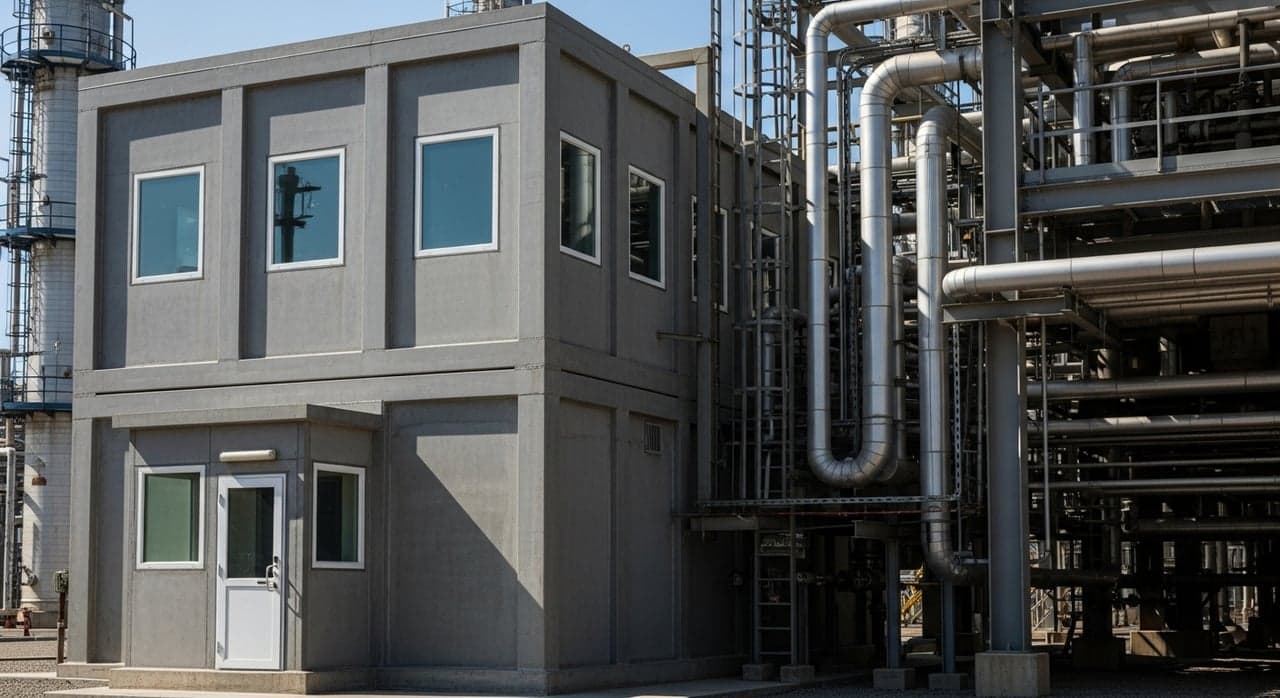
In March 2005 the BP Texas City refinery explosion killed fifteen contractors in a portable trailer twenty five metres from an isomerisation unit blowdown. The investigation findings transformed facility siting practice and gave us API RP 753 for portable buildings, the later revisions of API RP 752 for permanent buildings and API RP 756 for tents. An occupied building risk assessment quantifies three impact pathways against your buildings, namely overpressure and impulse where blast vulnerability follows the ASCE Petrochemical Energy Committee curves, thermal radiation that brings skin burns, asphyxiation and structural ignition, and toxic infiltration where the HVAC draws exposure toward the AEGL 2 and SLOT criteria. We apply this across everything from control rooms and administration blocks to construction trailers, contractor cabins and turnaround tents. Our team also integrates CFD class vapour cloud explosion results for high confidence overpressure and applies engineering damage criteria from the ASCE, Stephens and Baker Strehlow Tang vulnerability curves.
How the study is executed
We open at building inventory & occupancy classification and close at retrofit recommendations & occupancy management plan, and each stage hands the next one a record rather than a summary of it.
Compile building register per API RP 752 (permanent), 753 (portable), 756 (tents), record structural type (brick, portal frame, modular, BRM), occupancy (peak persons, occupied hours, staff vs contractor), and building GPS coordinates, flag building modifications since last OBRA cycle.
Link explosion scenarios from FERA or CDM study to building locations, apply Multi Energy / Baker Strehlow Tang for standard cases and 3D CFD for high confidence VCE cases, calculate side on overpressure, positive phase duration, and impulse at each building façade.
Apply ASCE Petrochemical Energy Committee structural fragility curves per building type, derive probability of minor / moderate / major damage / collapse, calculate personnel fatality and injury probability per blast damage state using Pietersen / Stephens injury probit functions.
Calculate thermal dose and skin burn / structural ignition risk at each building from fire scenarios, model toxic infiltration via HVAC air change rate and infiltration factor against AEGL 2 / SLOT criteria, determine shelter in place viability and maximum safe duration.
Calculate Individual Risk per Annum (IRPA) per building, compute PLL weighted by occupancy, where multi building aggregation required, produce F N curves, compare against the tolerability criteria agreed with you, identify buildings exceeding threshold requiring priority action.
Develop building by building upgrade options (BRM procurement, structural reinforcement, relocation, demolition, occupancy reduction) with blast load specification, produce cost benefit appraisal, issue occupancy management plan for turnarounds and routine operations, specify 5 year re assessment trigger matrix.

What the study covers in full
Outcomes of Occupied Building Risk Assessment (OBRA)
- We close the silent multi fatality exposure pattern that Texas City made impossible to ignore
- We quantify building vulnerability against your actual blast, fire and toxic envelopes
- We guide portable building siting, where the safe set back for a high hazard unit is typically seventy five to a hundred metres or more
- We identify the control room and administration block consolidation moves that lower site individual risk
- Your assessment holds up under API RP 752, 753 and 756 with their five year re assessment expectation
- It provides an ALARP demonstration for occupied building risk in your COMAH safety report
- It withstands the OSHA national emphasis programme focus on building siting
- It aligns with PESO, Factories Act and MoEFCC building protection expectations
- We drive realistic occupancy management through turnarounds and routine operations
- We inform your control room consolidation and remote operations strategy
- We support blast resistant module procurement specifications
- We sharpen your muster point and shelter in place strategy
- We target blast resistance capital at the genuinely vulnerable buildings
- We avoid over designing low risk administration buildings
- We defer full reconstruction through an engineered retrofit
- We quantify multi fatality exposure for your underwriters to assess
Codes & standards we work to
Triggers that signal the need
Where Occupied Building Risk Assessment (OBRA) applies
Tangible deliverables
- A report aligned to API RP 752, 753 and 756
- A building inventory with classification, occupancy and proximity data
- Overpressure, thermal and toxic source term linkage to your fire and explosion scenarios
- A building by building damage and personnel vulnerability assessment
- Individual risk, potential loss of life and frequency number metrics per building and across the site
- A retrofit, relocation and demolition recommendation matrix
- A blast load specification in pressure and impulse for new building procurement
- A blast resistant module specification where it applies
- An occupancy management plan for turnarounds and routine operations
- A five year re assessment trigger matrix
Send us the scope
We will scope Occupied Building Risk Assessment (OBRA) against your site and come back with what it would take. Send us the unit, the P&ID revision it sits at and the inventory it holds.