Fire and Explosion Risk Analysis (FERA)
3D CFD class fire and explosion modelling across vapour cloud explosion, BLEVE, jet fire, flash fire and domino effects
Fire and Explosion
Risk Analysis (FERA)
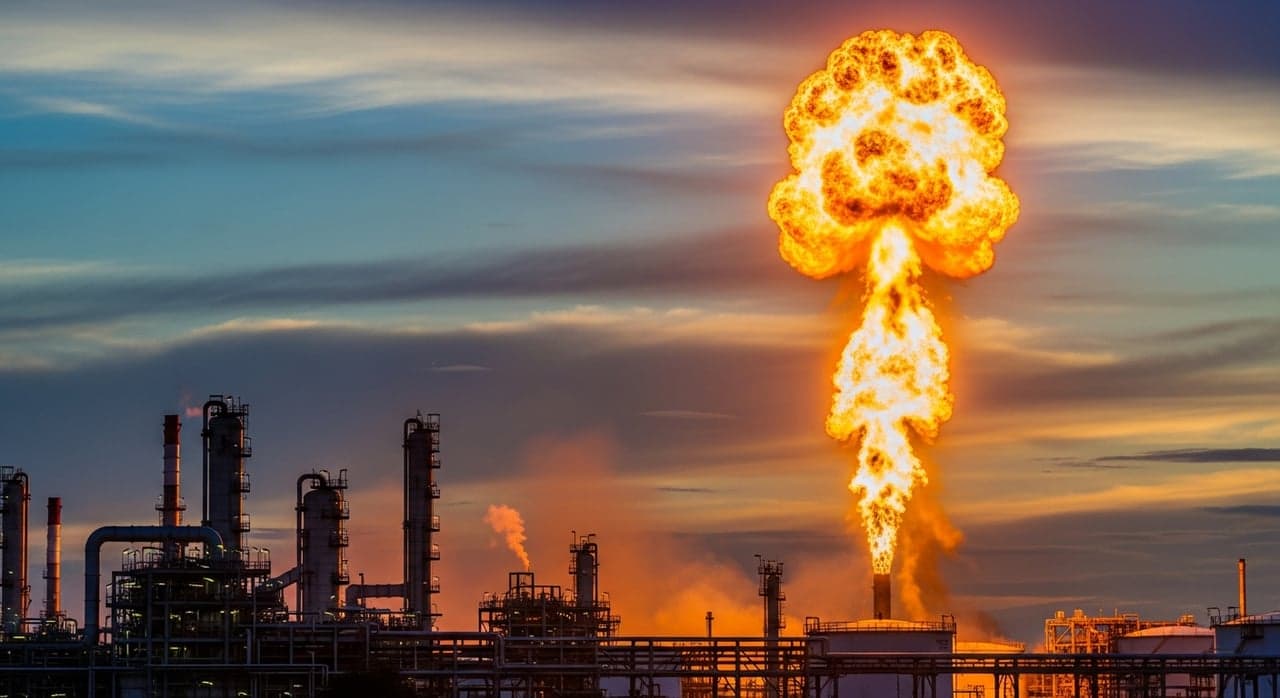
Fire and explosion risk analysis underpins your facility siting, occupied building protection, fire and gas mapping, fireproofing scope, emergency response and quantitative escalation logic. Over the last decade the discipline has moved decisively from empirical TNT equivalent and multi energy methods to 3D CFD class modelling that captures real congestion, confinement and ventilation, and the difference can be orders of magnitude in the overpressure predicted for a typical petrochemical layout. The Buncefield event in 2005, where overpressures far exceeded what any prior model expected, drove a regulator led shift toward CFD for high consequence cases. Our team integrates leak frequency from OGP 434 and FRED, ignition probability from Cox and Lees with a congestion uplift, BLEVE consequence from Roberts and CCPS, jet fire radiation from Chamberlain and Cook and Cullis and Bow Tie escalation pathways for domino assessment. The hardest decisions stay with the boundary conditions, namely which scenarios merit full CFD against phenomenological modelling and how to communicate the uncertainty honestly to decision makers who are not engineers, and that judgement is exactly what we bring.
How the study is executed
We open at scenario catalogue & source term modelling and close at design recommendations & facility siting input, and each stage hands the next one a record rather than a summary of it.
Define FERA scenario set from leak frequency data (OGP 434 / HSE FRED), specify orifice sizes (3 / 10 / 25 mm equivalent for gas, 3 / 50 mm for liquid), fluid phases, and release orientations, calculate source terms including two phase flash and cryogenic pool formation.
Model pool fires (Thomas / Mudan thermal flux model), jet fires (Chamberlain / Cook Cullis with radiant fraction), and flash fire LFL envelopes, calculate radiation iso contours at 4 / 12.5 / 37.5 kW/m² for PFP scope, detector siting, and occupied building impact.
Apply TNT, Multi Energy, and Baker Strehlow Tang methods for screening, deploy 3D CFD for high consequence VCE cases requiring congestion parameterisation (volume blockage ratio, obstacle density), produce overpressure and positive impulse iso contours.
Model BLEVE fireball (Roberts / Hasegawa correlation) for LPG / LNG / pressure liquefied gas, calculate fragment trajectory and mechanical damage radius, apply Cozzani / IChemE domino thresholds (radiation 37.5 kW/m², overpressure 0.3 bar) for escalation identification.
Apply Cox Lees ignition model with delayed ignition conditional split (VCE vs pool / jet fire), integrate frequency × consequence to produce risk metrics, identify dominant risk contributors, generate F&G mapping cloud size inputs and facility siting overpressure dataset.
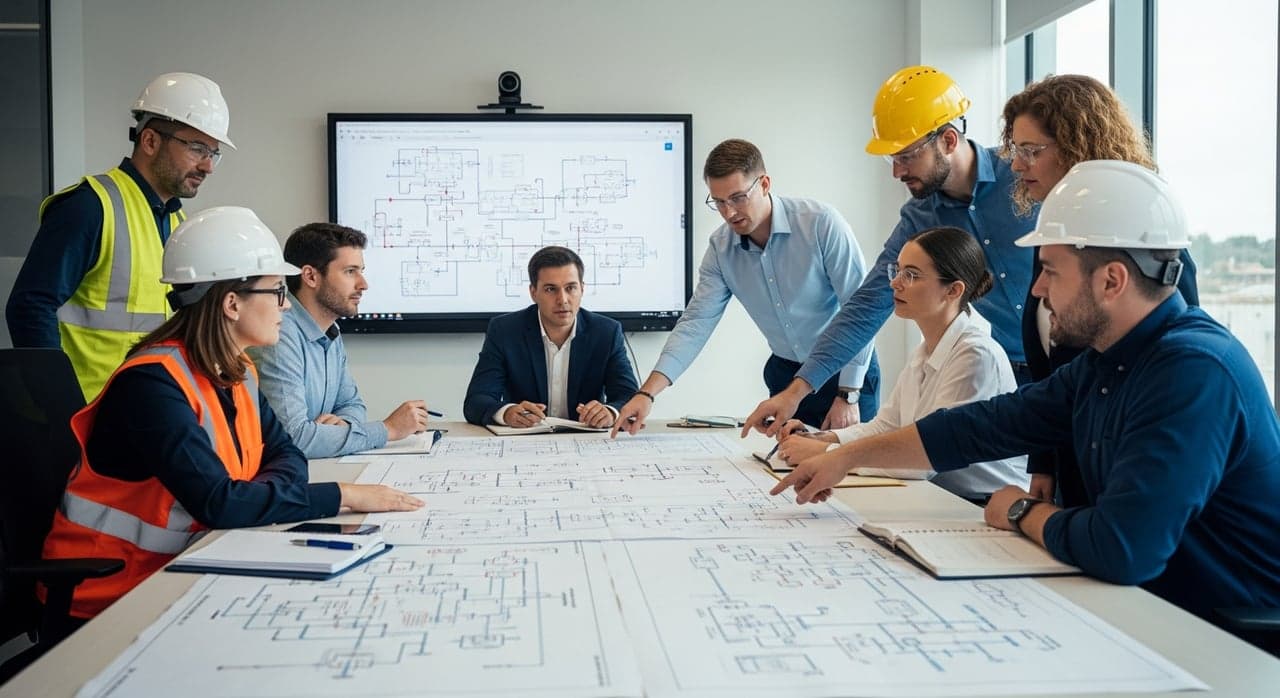
Issue PFP scope optimisation from actual thermal radiation field, provide blast load specification (peak overpressure, impulse) per API RP 752 for occupied building assessment, recommend firewater demand and deluge coverage, produce COMAH / EPA RMP compliant consequence documentation.
What the study covers in full
Outcomes of Fire and Explosion Risk Analysis (FERA)
- We capture the congestion driven vapour cloud explosion intensification that Buncefield made visible
- We identify BLEVE consequence and escalation pathways before they appear in an incident
- We drive your passive fire protection scope, fire and gas coverage and blast resistant design from physics rather than rules of thumb
- We anchor your muster point and evacuation distances in realistic siting
- Your analysis withstands API RP 752, 753 and 756 occupied building siting examination
- It supports your COMAH and Seveso III consequence modelling demonstration
- It gives EPA RMP off site consequence evidence at high modelling fidelity
- It withstands underwriter and insurance broker challenge through renewal cycles
- We right size your firewater demand, deluge coverage and passive fire protection scope to the actual thermal load
- We site your fire and gas detectors against credible cloud sizes rather than regulatory minima
- We give you realistic emergency response drill scenarios
- We identify the small subset of equipment that drives the dominant fire and explosion risk
- You avoid the twenty to fifty percent passive fire protection over scoping common in legacy installations
- You can defer building reinforcement capital on the strength of quantified blast load evidence
- High fidelity modelling that gives your underwriters quantified evidence
- You cut your loss of containment business interruption exposure
Codes & standards we work to
Triggers that signal the need
Where Fire and Explosion Risk Analysis (FERA) applies
Tangible deliverables
- A report with the scenario catalogue and the modelling methodology
- A source term, ignition probability and consequence calculation pack
- Thermal radiation iso contour plots at 4, 12.5 and 37.5 kW per square metre to API RP 521
- Overpressure iso contour plots and impulse data
- 3D model files where we performed CFD
- A BLEVE consequence and fireball trajectory analysis
- An escalation and domino assessment against the Cozzani thresholds
- A passive fire protection scope and active protection upgrade recommendation
- Fire and gas mapping input data with credible cloud sizes
- An emergency response zone and evacuation distance basis
- A facility siting recommendation against the API RP 752 occupant impact metrics
Send us the scope
We will scope Fire and Explosion Risk Analysis (FERA) against your site and come back with what it would take. Send us the unit, the P&ID revision it sits at and the inventory it holds.