Corrosion Risk and Fitness for Service (FFS) Assessment
Level 1, 2, and 3 FFS to API 579 1 and ASME FFS 1, engineering judgement that safely defers millions of dollars of capex
Corrosion Risk and Fitness
for Service (FFS) Assessment
Fitness for Service to API 579 1 and ASME FFS 1, a joint publication now in its 3rd Edition of 2021, is the dominant engineering framework for evaluating pressure equipment that carries degradation such as corrosion, cracking, dents, fire damage, creep, hydrogen induced damage, fatigue, and microbiological attack. The framework provides three assessment tiers. Level 1 is a conservative screening through simple equations, Level 2 is a more rigorous engineering analysis, and Level 3 uses finite element analysis or fracture mechanics. Fourteen chapters cover specific damage mechanisms from general thinning through weld misalignment to brittle fracture. Our team also routinely integrates API 571 damage mechanism interpretation, NACE SP0472 and SP0170 corrosion control programmes, feedback from API 580 and 581 RBI, and ASME B31.G and Modified B31.G for pipelines. The 2021 revision tightened the High Temperature Hydrogen Attack procedures following the Tesoro Anacortes event of 2010, documented in the CSB final report of 2014, and added expanded fracture mechanics for sour service equipment. The work matters most where it defers turnaround scope, justifies adjustments to operating conditions, and replaces a binary fix or replace decision with an engineered run with monitoring arrangement.
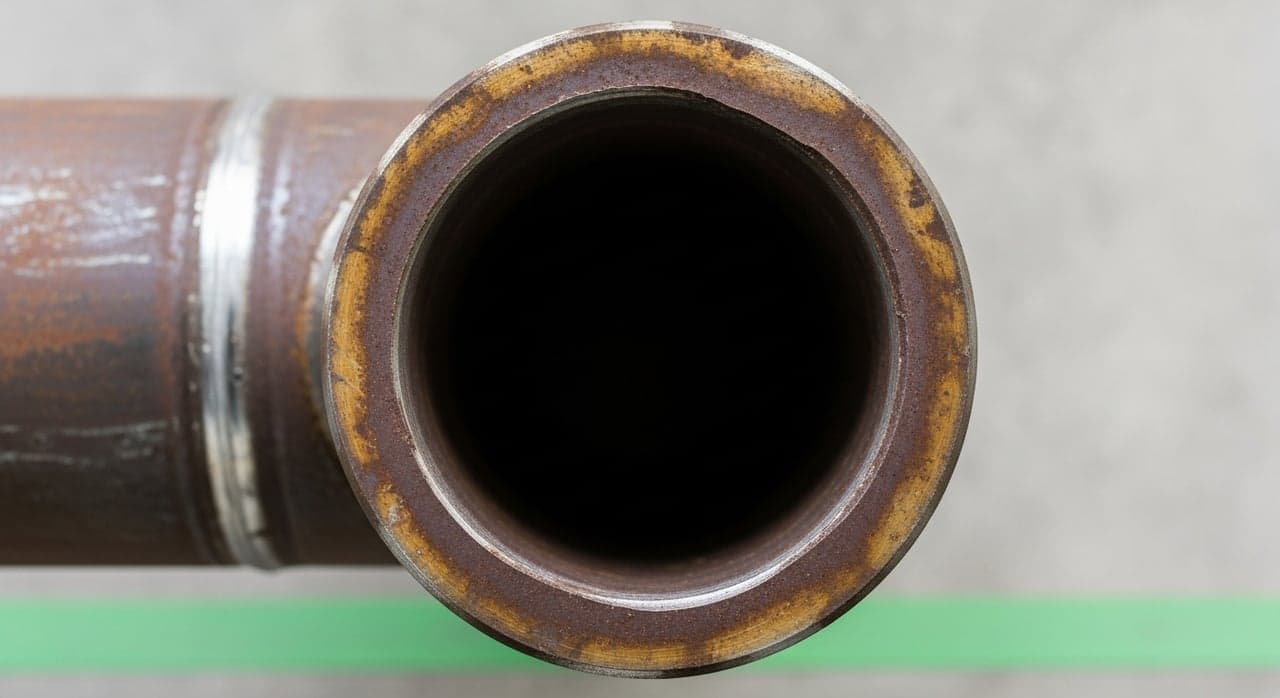
Corrosion Risk and Fitness for Service (FFS) Assessment workflow
Catalogue corrosion mechanisms per API RP 571, general thinning, localised pitting, CUI, HIC/SSC, HTHA, MIC, erosion corrosion, conduct inspection survey (UT, RT, AUT, eddy current, MFL) to quantify wall thickness, defect size, and distribution.
Select applicable FFS procedure per API 579 1 / ASME FFS 1, Part 4 (general thinning), Part 5 (local thinning), Part 6 (pitting), Part 7 (HIC/SOHIC blistering), Part 8 (weld misalignment), Part 9 (crack like flaws), Part 10 (HTHA), Part 11 (creep).
Conduct tiered assessment, Level 1 (screening, conservative), Level 2 (engineering, balanced), Level 3 (advanced FEA, refined), select level based on screening result and remediation cost, align with operator competency and FFS specialist team.
Calculate Remaining Strength Factor (RSF) per API 579, if RSF < target (typically 0.9), re rate MAWP / MAOP per code formula, document operating pressure reduction option, align with API 510 / 570 inspection programme.
Calculate remaining life from observed corrosion rate (long term and short term per API 510 / 570), set inspection interval at half remaining life (per API 510 / 570 default) or per RBI assessment, integrate with PHA / LOPA risk evaluation.
Author run / repair / replace recommendation with cost benefit, specify temporary repair (clamp, sleeve, fillet weld, composite wrap) vs permanent repair vs replacement, integrate with MOC and PHA revalidation, align with insurer / underwriter notification requirement.

Every deliverable from basis to handover
Complete Corrosion Risk and Fitness for Service (FFS) Assessment scope covering every calculation, drawing, specification, and construction support activity.
Outcomes of Corrosion Risk and Fitness for Service (FFS) Assessment
- Confirms continued safe operation of degraded equipment on a quantitative basis
- Surfaces imminent failure conditions where leak before burst no longer holds
- Drives the choice of inspection method that catches the active damage mechanism
- Closes the HTHA detection gap seen at Tesoro Anacortes and Husky Superior
- Holds up under API 579 1 and ASME FFS 1 of the 3rd Edition 2021
- Provides evidence your Authorised Inspector and AHJ will accept for running until the next turnaround
- Withstands NACE and AMPP scrutiny on sour service equipment
- Supports the scrutiny of insurance underwriters on ageing asset portfolios
- Defers full equipment replacement through an engineered run with monitoring arrangement
- Anchors the RBI re baseline with a quantitative remaining life basis
- Drives turnaround scope optimisation by focusing on the items that fail FFS
- Supports de rating of operating pressure or temperature where capex is deferred
- Defers millions of dollars of capex on pressure vessel and piping replacement
- Optimises turnaround scope to only what FFS demands
- Avoids the cost of an unplanned outage from late damage detection
- Documents ageing asset condition for underwriters to assess
Codes & standards we work to
Triggers that signal the need
Where Corrosion Risk and Fitness for Service (FFS) Assessment applies
Tangible deliverables
- An FFS assessment report at the appropriate Level 1, 2, or 3
- API RP 571 damage mechanism identification for each item of equipment
- Statistical analysis of the thickness measurements
- A Remaining Strength Factor calculation for each damage area
- Brittle fracture, HTHA, creep, and HIC assessment as applicable
- A remaining life prediction with the corrosion rate and its uncertainty
- A repair, re rate, or retire decision with the engineering basis
- An inspection plan update with the FFS re assessment trigger criteria
- Run with monitoring conditions where they apply
Send us the scope
We will scope Corrosion Risk and Fitness for Service (FFS) Assessment against your site and come back with what it would take. Send us the process conditions, the equipment list and the stage the design has reached.