Reliability Centered Maintenance (RCM)
RCM to SAE JA1011 and JA1012 that drives maintenance from genuine failure consequences for your capital intensive assets
Reliability Centered
Maintenance (RCM)
RCM was developed in the 1960s for US commercial aviation through United Airlines work that became MSG 1, then MSG 2, then MSG 3, and it was adapted to the process industry through John Moubray's RCM II of 1997. It is the structured methodology that determines what maintenance work is genuinely required to preserve asset function. SAE JA1011 as the standard and JA1012 as the guide define the seven core questions that any process worthy of the RCM name must answer, covering functions, functional failures, failure modes, failure effects, failure consequences, preventive tasks, and default actions. The discipline sets itself apart from time based maintenance through consequence categorisation across hidden, safety and environmental, operational, and non operational outcomes, and through task selection logic that prefers predictive and condition based monitoring over scheduled overhaul wherever it makes sense. Our team integrates RCM with API RP 580 RBI for static equipment so that RCM does not duplicate inspection logic, with ISO 14224 reliability data conventions for failure rate libraries, and with CMMS and EAM platforms such as SAP PM, and Infor EAM for execution. The hardest part of RCM remains team discipline, and we keep the workshop from drifting into preserving legacy preventive maintenance tasks rather than challenging them against JA1011 logic.
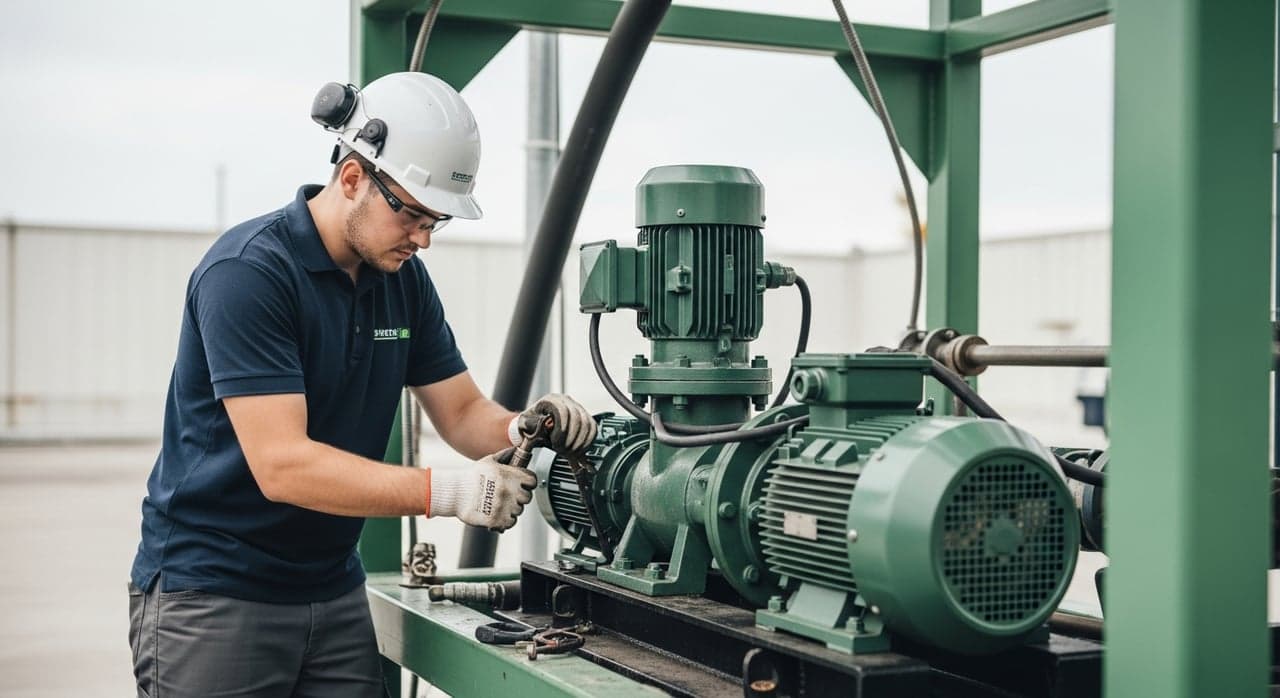
Reliability Centered Maintenance (RCM) workflow
Define RCM analysis boundary per SAE JA1011, asset hierarchy (system, sub system, component), document operating context (duty, environment, availability target), identify primary and secondary functions per asset.
Author FMEA per JA1012, identify functional failures (partial, complete, standby), failure modes per ISO 14224, failure effects on safety, environment, production, populate failure rate data from OREDA / ISO 14224 reliability banks.
Categorise failure consequences per RCM logic, Hidden, Safety / Environmental, Operational, Non Operational, align with site risk matrix and CCPS RBPS consequence framework, identify safety critical functions requiring FFT.
Apply RCM task selection logic tree, condition based / predictive (preferred) > scheduled restoration > scheduled discard > failure finding (for hidden functions) > default (redesign or RTF), verify technical feasibility and worth doing test per JA1011.
Compile maintenance strategy per asset with task hierarchy (PM, PdM, FFT, inspection), integrate with CMMS (the CMMS of record) with task templates, resource planning, and spare parts coordination.
Establish living programme governance per Moubray RCM II, re baseline triggers (failure history change, modification, technology, regulatory), annual review of effectiveness, integrate with MOC and PHA revalidation.

Every deliverable from basis to handover
Complete Reliability Centered Maintenance (RCM) scope covering every calculation, drawing, specification, and construction support activity.
Outcomes of Reliability Centered Maintenance (RCM)
- Targets maintenance to genuine failure consequences
- Reduces hidden failure risk on safety critical assets
- Strengthens proof test discipline
- Underpins your operational integrity
- Aligns with SAE JA1011 and ISO 55000
- Documents the rationale behind each maintenance task
- Supports regulator and insurer scrutiny
- Produces documentation that withstands a customer reliability audit
- Lifts equipment availability
- Reduces planned downtime
- Strengthens adoption of predictive maintenance
- Supports CMMS data quality
- Curbs maintenance cost by eliminating and optimising tasks
- Improves asset utilisation and OEE
- Defers capex through better asset care
- Lowers spare parts holding cost
Codes & standards we work to
Triggers that signal the need
Where Reliability Centered Maintenance (RCM) applies
Tangible deliverables
- An RCM analysis report
- FMEA worksheets
- The task selection rationale
- A maintenance strategy for each asset
- A CMMS work order template
- A revalidation framework
Send us the scope
We will scope Reliability Centered Maintenance (RCM) against your site and come back with what it would take. Send us the process conditions, the equipment list and the stage the design has reached.