Sprinkler, Foam and Gas Suppression Design
We provide specialised suppression engineering across NFPA 13, 16, 2001 and 12
Sprinkler, Foam and Gas
Suppression Design
Fire suppression only works when the agent is matched to the fuel. Water spreads a flammable liquid pool fire, it destroys the energised electronics it is meant to protect, and it reacts violently with a combustible metal fire. Effective design therefore begins with the hazard rather than the catalogue, so we start from the fuel, its geometry and fire growth rate, the value being protected and whether the objective is control, suppression or total flooding. We then engineer the matched system to code, providing sprinkler and water based protection to NFPA 13 at the correct design density and area of application, foam to NFPA 11 and 16 for hydrocarbon hazards, clean agent to NFPA 2001 for occupied electronic and control rooms, and carbon dioxide to NFPA 12 where its life safety hazards can be managed. We integrate detection, actuation and the water supply so the system performs as a whole and not as a set of isolated components.
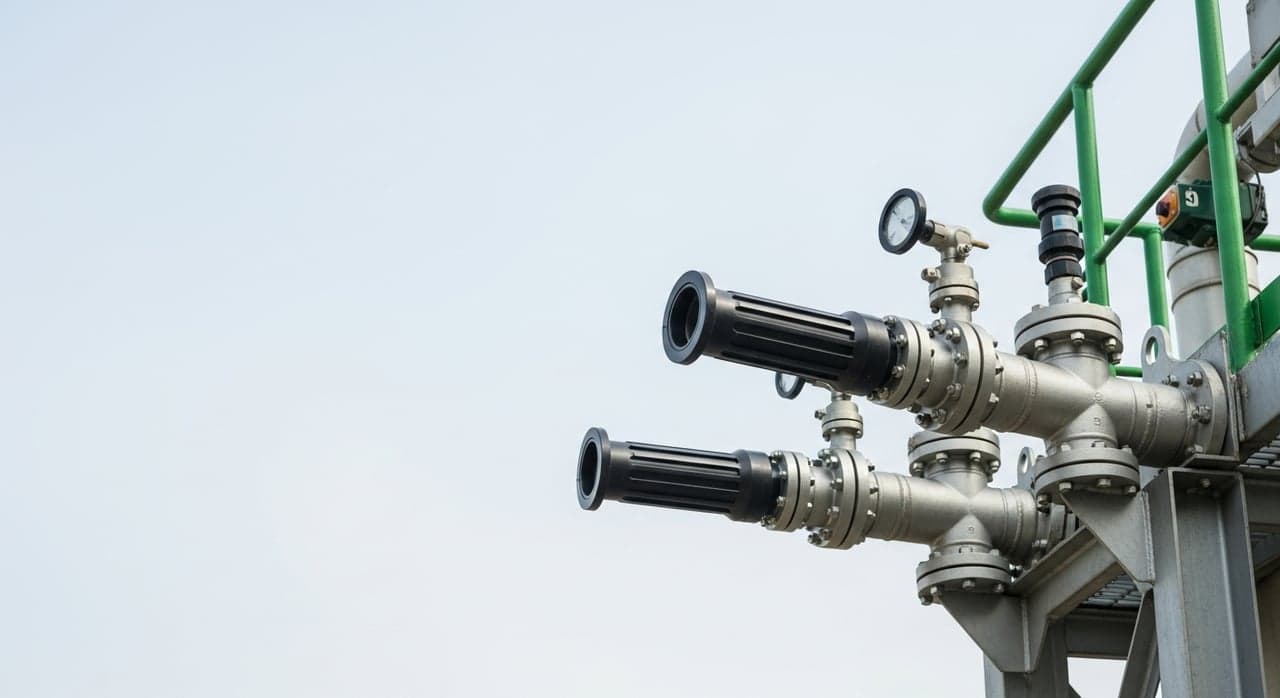
Sprinkler, Foam and Gas Suppression Design workflow
Classify hazard per NFPA 13 / FM DS 3 26, Light Hazard, Ordinary Hazard 1 / 2, Extra Hazard 1 / 2, determine design density (gpm/ft² or lpm/m²) per occupancy and storage configuration, align with FM Global Property Loss Prevention Data Sheets.
Select sprinkler type per application, standard response (5.6 K), quick response (5.6 K), ESFR (14, 16.8, 22.4, 25.2 K), CMSA (16.8 K), specify temperature rating (135°F, 200°F, 286°F, 400°F, 500°F+) per ambient and ceiling temperature.
Conduct hydraulic calculation per NFPA 13, Hazen Williams or Darcy Weisbach formula, pipe schedule (Schedule 10 / 40 black steel, CPVC, copper), size pipes for design density + 30 min duration light hazard / 60 min ordinary / 90 min extra.
For tank farm / flammable liquid, design foam system per NFPA 11 (low expansion AFFF / AR AFFF) / NFPA 16 (foam water sprinkler), calculate foam concentrate inventory per credible worst case fire duration, specify proportioning (around the pump, balanced pressure).
For special hazards (control rooms, electrical rooms, archives), design gaseous suppression per NFPA 2001 (Clean Agent, Novec 1230, FM 200) / NFPA 12 (CO₂), calculate design concentration, hold time, room integrity per door fan test.
Design ITM programme per NFPA 25, weekly visual, monthly fire pump test, quarterly main drain test, annual full flow test, 5 yearly internal inspection, align with FM Global Data Sheet 2 81 and insurer HPR requirements.
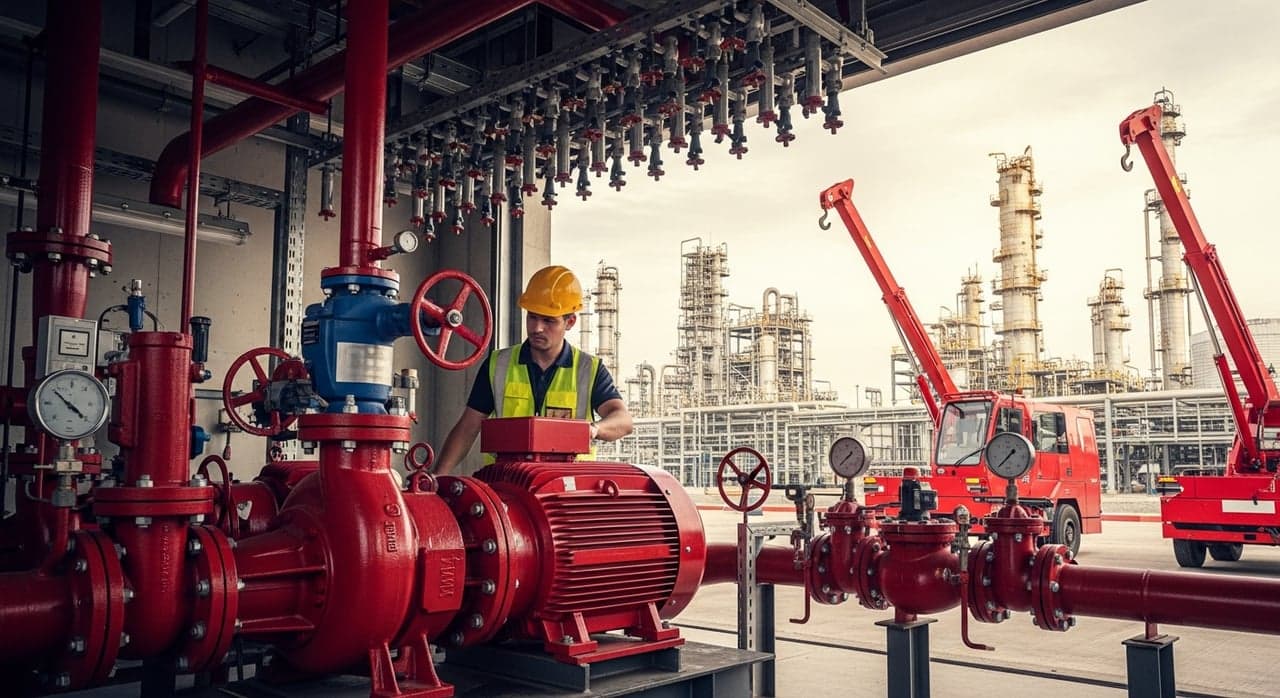
Every deliverable from basis to handover
Complete Sprinkler, Foam and Gas Suppression Design scope covering every calculation, drawing, specification, and construction support activity.
Outcomes of Sprinkler, Foam and Gas Suppression Design
- We deliver fast and targeted fire suppression
- We reduce fire escalation and damage
- We sharpen the time occupants have to evacuate
- We protect your critical assets
- We keep the design aligned with the NFPA suite
- We document FM Global compliance
- We support your insurer requirements
- We produce work that holds up under AHJ review
- We harden your inspection, testing and maintenance regime
- We reduce the frequency of nuisance discharge
- We improve system reliability
- We back realistic drill scenarios
- We right size suppression capacity
- We avoid an over specified agent inventory
- We reduce business interruption
- We document protection for your insurer to assess
Codes & standards we work to
Triggers that signal the need
Where Sprinkler, Foam and Gas Suppression Design applies
Tangible deliverables
- Suppression design basis
- Hydraulic calculations
- Equipment specifications
- Cause and effect logic for suppression activation
- Commissioning test procedure
- Inspection, testing and maintenance programme
Send us the scope
We will scope Sprinkler, Foam and Gas Suppression Design against your site and come back with what it would take. Send us the process conditions, the equipment list and the stage the design has reached.