Workplace Exposure Assessment and Monitoring
Multi agent chemical, physical and biological exposure profiling across your similar exposure groups using the AIHA Bayesian method
Workplace Exposure Assessment
and Monitoring
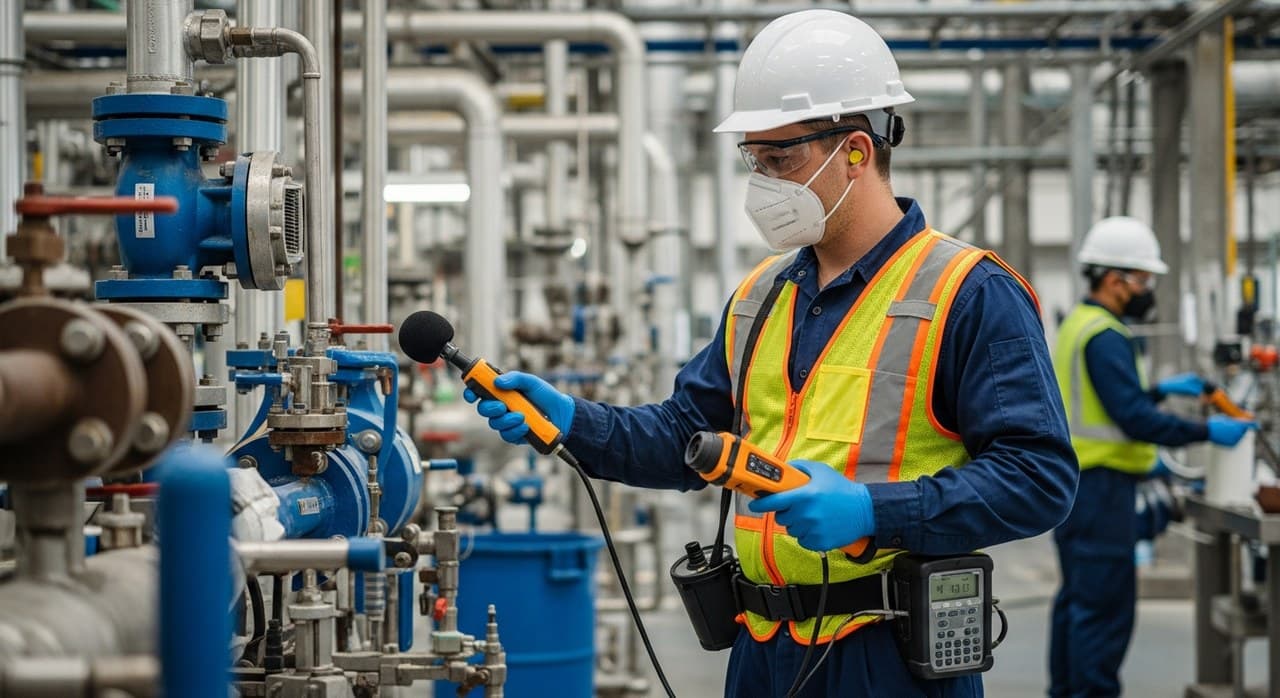
Workplace exposure assessment quantifies the full spectrum of occupational exposures across chemical vapours, dusts, fumes and mists, biological agents such as mould, endotoxin and bloodborne pathogens, noise, hand arm and whole body vibration, heat, cold, illumination and both ionising and non ionising radiation, all through the AIHA Bayesian decision analysis framework. The discipline is under heightened scrutiny following the EU occupational exposure limit directive that covers twenty five carcinogens including hexavalent chromium, hardwood dust, formaldehyde and benzene, the recent ACGIH threshold limit value revisions on welding fume that took manganese down to 0.02 milligrams per cubic metre and the enforcement of the OSHA respirable crystalline silica standard at a permissible limit of 50 micrograms per cubic metre. Our team integrates real time direct reading monitoring with instruments such as the Drager X am, Honeywell BW and RAE and MultiRAE, passive samplers using 3M and SKC organic vapour badges and the NIOSH NMAM methods, area based static monitors for fenceline and zone air quality and statistical platforms such as IHSTAT Plus, Expostats and BWStat that move beyond a simple limit comparison to Bayesian posterior estimation.
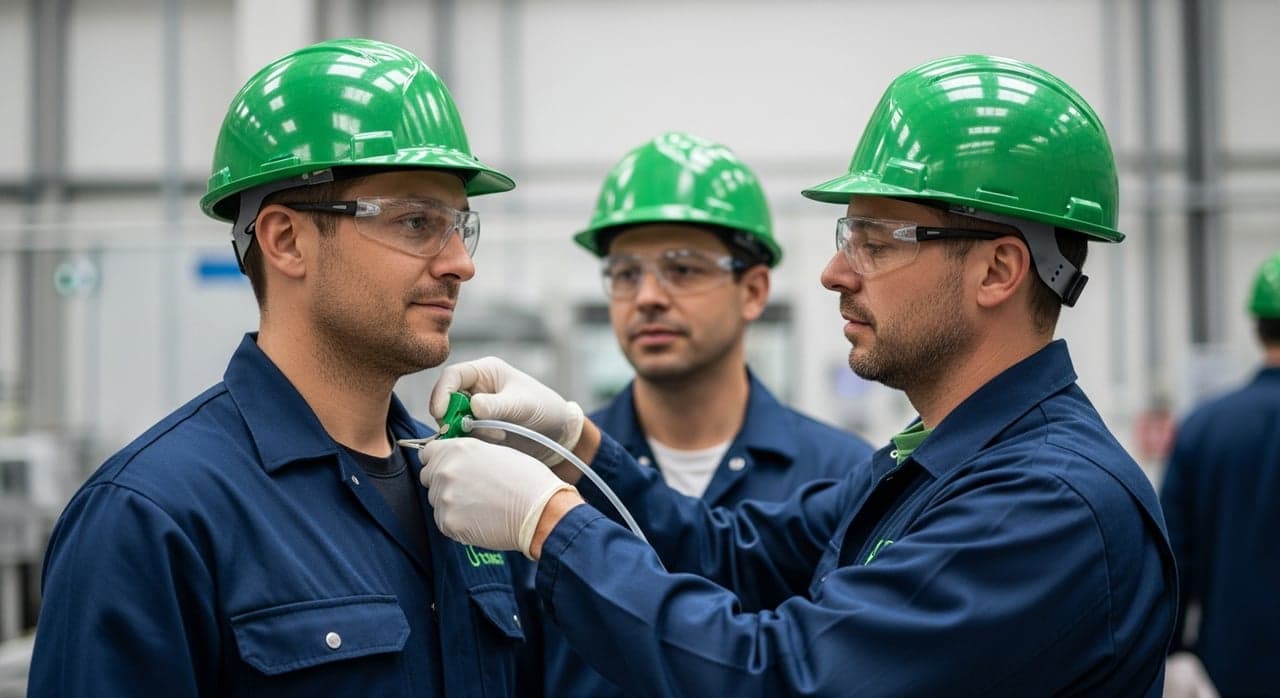
Our implementation model
We fix the standards that apply to your site before we open at exposure assessment strategy, and we do not close at action programme & re sampling until they are met.
Design exposure assessment strategy per EN 689 / NIOSH Occupational Exposure Sampling Strategy Manual / AIHA Strategy, Similar Exposure Group (SEG) definition, sampling type (compliance / characterisation / surveillance), sample size (typically 6 to 10).
Select sampling method per agent, OSHA / NIOSH / HSE MDHS methods, specify pump (constant flow, low flow), media (sorbent tube, filter, impinger), collection time (full shift TWA, short term excursion), align with ACGIH / NIOSH protocols.
Conduct field sampling with pump calibration (pre / post per OSHA), sample collection per SEG, chain of custody, specify QA/QC per NIOSH Method validation, accuracy, precision, recovery, align with AIHA LAP accredited laboratory.
Submit samples to AIHA LAP / A2LA accredited laboratory, specify analytical method per NIOSH / OSHA / ISO, receive results with detection limit, accuracy, and qualified data narrative, align with quality assurance protocols.
Conduct statistical analysis per EN 689 / AIHA, geometric mean (GM), geometric standard deviation (GSD), 95th percentile, compare against OEL (OSHA PEL, NIOSH REL, ACGIH TLV, ECHA DNEL), apply categorisation (overexposed / acceptable).
Recommend action programme, engineering controls (LEV, enclosure), administrative (rotation, training), PPE (respiratory, dermal), design re sampling cadence (annual / triennial per AIHA strategy) for verification.
Workplace Exposure Assessment in full scope
Value of Workplace Exposure Assessment and Monitoring
- We detect exposure to the recently tightened limits for welding fume, hexavalent chromium and hardwood dust before there is any health impact
- We surface the multi agent additive and synergistic exposure that single agent surveys miss
- We drive engineering control investment to the exposure group and agent combinations that cause the most harm
- We anchor your medical surveillance programmes in quantitative exposure data
- Your records hold up under OSHA Subpart Z and the EU occupational exposure limit directive
- They provide legally defensible evidence for occupational disease litigation
- They withstand HSE, OSHA, DGFASLI and EU competent authority inspection
- They align with ISO 45001 Clause 6.1.2 hazard identification and Clause 9.1.1 monitoring
- We target local exhaust ventilation, enclosure and ventilation investment at the genuinely overexposed groups
- We reduce nuisance and over precautionary PPE use with real evidence
- We sharpen your medical surveillance and biomonitoring trigger lists
- We drive management of change discipline for new chemical, process and tool introductions
- We pre empt occupational disease compensation for silicosis, hearing loss and hexavalent chromium cancer
- We reduce your PPE inventory through right sizing, typically by thirty to fifty percent
- We document the exposure controls your workers compensation insurer assesses
- We support productivity through reduced absenteeism and presenteeism
Codes & standards we work to
Triggers that signal the need
Where Workplace Exposure Assessment and Monitoring applies
Tangible deliverables
- A multi agent exposure assessment report
- A similar exposure group register with agent, task and control mapping
- An AIHA Bayesian statistical analysis with posterior distributions
- Benchmarking against multiple limits including the OSHA permissible limit, the ACGIH threshold value, the EU limit and the NIOSH recommended limit
- Direct reading and integrated sampling raw data with chain of custody
- A hierarchy of controls recommendation for each exposure group and agent
- A medical surveillance and biomonitoring trigger schedule
- A basis for the re monitoring frequency
- An industrial hygiene control plan with capital prioritisation
Send us the scope
We will scope Workplace Exposure Assessment and Monitoring against your site and come back with what it would take. Tell us the site, the consents it holds and what it is measured against.