SMMS Workshop (Targeted Strategy Application)
A focused Substitute, Minimise, Moderate, and Simplify workshop for a specific high hazard area or a post incident redesign
SMMS Workshop (Targeted
Strategy Application)
Trevor Kletz set out four inherent safer design strategies. Substitute replaces the hazardous material, Minimise reduces inventory, Moderate operates at less severe conditions, and Simplify eliminates complexity. They originated at ICI in the 1970s following the Flixborough disaster of 1974 with twenty eight fatalities, and they were codified into CCPS Inherently Safer Chemical Processes, first in 1996 and then in its 2nd Edition of 2009, and into the EPSC inherent safer design guidance. The approach remains the most cost effective way to reduce hazards in the chemical industry, because a hazard eliminated at the concept or FEED stage typically costs one to ten percent of the equivalent control layer retrofit and avoids the cumulative reliability burden of safeguards. Our SMMS workshops matter most at three points. These are conceptual design where substitution and process route selection are open, the FEED stage where minimise, moderate, and simplify are most actionable, and post incident redesign where the most aggressive options finally surface. We also bring in the Heikkila Inherent Safety Index for quantitative scoring and use inherent safer design to reduce the later SIL allocation burden. A SIL 2 SIF on a hazard with a one hundred kilogram inventory can become a SIL 1 requirement, or be eliminated entirely, once the inventory drops to ten kilograms, which is often achievable through continuous flow conversion or feedstock substitution.

SMMS Workshop (Targeted Strategy Application) workflow
Establish Strategic Major Hazard Management System scope per CCPS RBPS Major Hazard frameworks, build major accident hazard (MAH) inventory from QRA / FERA / Bow Tie outputs, align with COMAH safety case and SEVESO III major accident scenario register.
Quantify MAH risk profile, IRPA, F N curve, PLL, location specific individual risk per UK HSE R2P2 tolerability framework, identify dominant risk drivers (top 20% contributing 80% of risk), align with corporate risk tolerability matrix.
Author multi year risk reduction roadmap with prioritised risk reduction projects per ALARP gross disproportion principle, sequence capex / opex investment by risk reduction per dollar metric, align with corporate capital planning cycle.
Establish MAH governance with named risk owners per major hazard, specify monthly risk review, quarterly leadership review, annual board review, align with corporate HSE governance and CCPS RBPS Process Safety Culture element.
Design MAH tracking KPIs per API RP 754 (Tier 1, 2, 3, 4 PSE indicators) and CCPS metrics, specify dashboard visualisation and escalation thresholds, integrate with corporate ESG reporting and external benchmark surveys (RCMI, OGUK).
Integrate SMMS with PSM elements (PHA, MOC, MI, Incident Investigation) and asset lifecycle (design, operations, modification, decommissioning), align with CCPS RBPS Risk Based framework and OSHA PSM / SEVESO regulatory requirements.
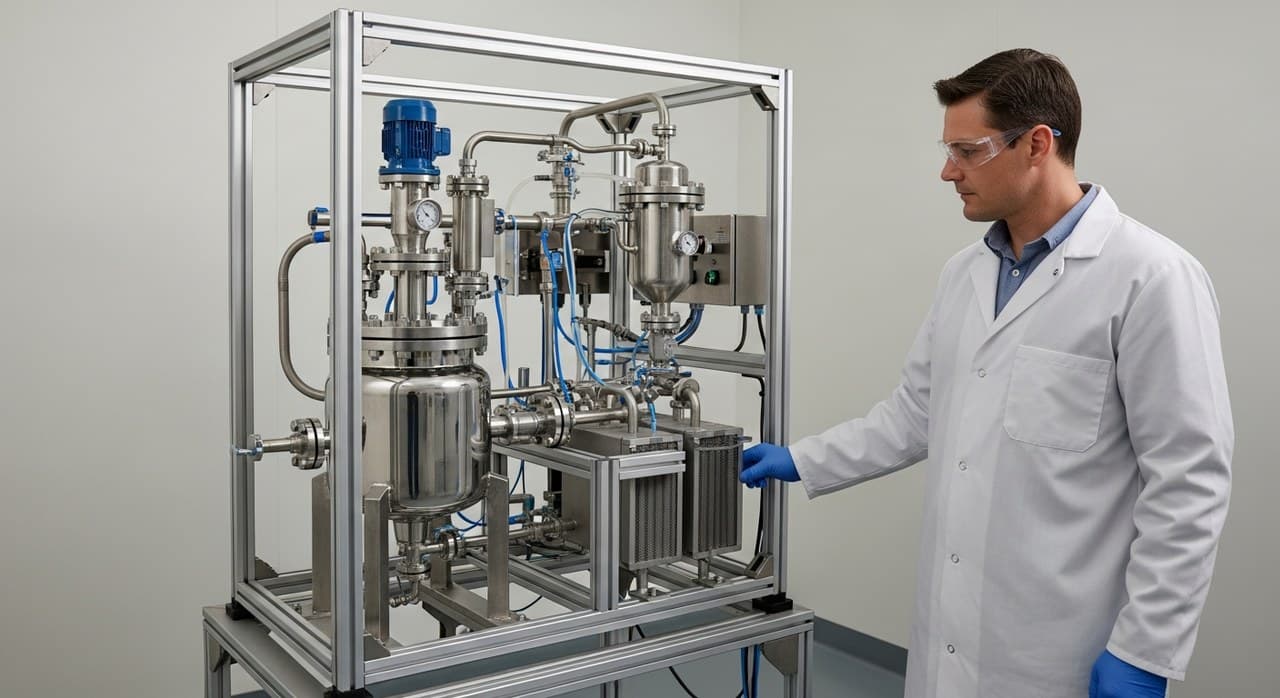
Every deliverable from basis to handover
Complete SMMS Workshop (Targeted Strategy Application) scope covering every calculation, drawing, specification, and construction support activity.
Outcomes of SMMS Workshop (Targeted Strategy Application)
- Eliminates hazards rather than controlling them
- Reduces consequence severity at the source
- Strengthens defence in depth
- Supports inherently safer asset retirement decisions
- Aligns with CCPS inherent safer design guidance
- Supports the OSHA PSM Process Design element
- Documents the inherent safety review for the regulator
- Withstands COMAH and SEVESO scrutiny
- Simplifies the operating and maintenance burden
- Reduces incident frequency at the source
- Sharpens MOC review against the inherent safer design baseline
- Supports adoption of process intensification
- Reduces the number of safeguards and SIL claims
- Documents the reduced inherent hazard for your insurer to assess
- Reduces capital cost through a simpler design
- Cuts operating cost through reduced inventory
Codes & standards we work to
Triggers that signal the need
Where SMMS Workshop (Targeted Strategy Application) applies
Tangible deliverables
- An SMMS workshop report
- A design alternatives matrix
- Inherent safety index scoring
- A HAZOP integration mapping
- An inherent safer design recommendation register
- An update to the FEED design basis
Send us the scope
We will scope SMMS Workshop (Targeted Strategy Application) against your site and come back with what it would take. Send us the process conditions, the equipment list and the stage the design has reached.