Heat and Mass Balance Preparation
We prepare rigorous heat and mass balances for your FEED and detailed engineering
Heat and Mass
Balance Preparation
Heat and mass balances are the quantitative foundation of every process engineering design, and they drive equipment sizing, energy integration, utility demand, and the emission inventory. When a balance is inaccurate or incomplete, the errors propagate through every downstream discipline. Our team prepares rigorous and validated balances across all of your operating cases, with full property method validation and documented uncertainty bounds so the numbers your design rests on are ones you can trust.
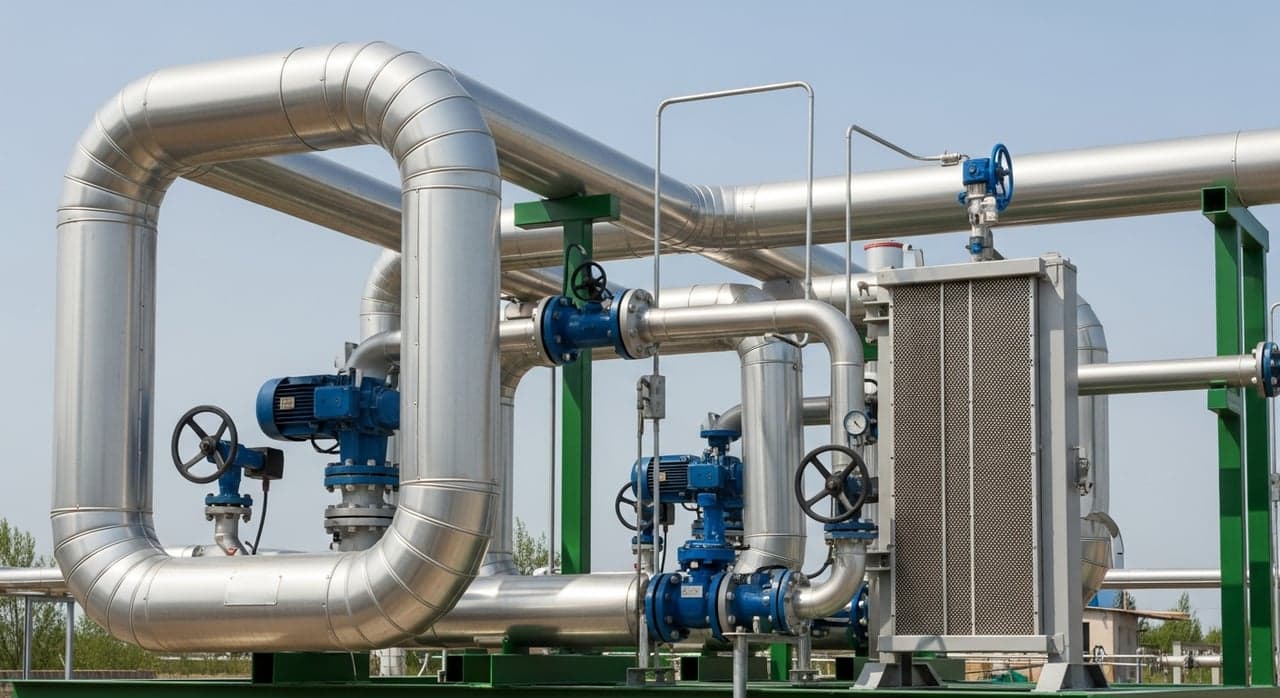
Heat and Mass Balance Preparation workflow
Define system boundary, operating cases, feed compositions, product specs, and utility availability limits.
Select and validate thermodynamic package against experimental, licensor, or literature data for each service fluid.
Construct and converge the process simulation model across all design, minimum, and maximum throughput cases.
Run pinch analysis, optimise heat exchanger network, and generate utility loading summary for all cases.
Vary key process parameters to map the safe operating window, emission inventory, and utility band.
Issue stream tables, utility summary, simulation model files, and supporting environmental inventory data.

Every deliverable from basis to handover
Complete Heat and Mass Balance Preparation scope covering every calculation, drawing, specification, and construction support activity.
Outcomes of Heat and Mass Balance Preparation
- Defines the safe operating envelopes for your process
- Identifies the high energy streams that need hazard analysis
- Supports relief and vent sizing
- Hardens the deviation analysis in your HAZOP
- Provides validated data for your permit applications
- Supports environmental inventory submissions
- Documents the design basis so it stands up to regulator review
- Follows recognised simulation practice across the industry
- Identifies energy and utility savings
- Strengthens how well your operators understand the process
- Supports DCS configuration and tuning
- Improves your debottlenecking analysis
- Cuts energy and utility consumption
- Sizes equipment correctly for the true operating cases
- Improves capital efficiency
- Supports the economics of retrofit and revamp work
Codes & standards we work to
Triggers that signal the need
Where Heat and Mass Balance Preparation applies
Tangible deliverables
- A heat and mass balance for each operating case
- Simulation model files
- Stream summary tables
- A utility loading summary
- A pinch analysis report
- Emission inventory data
Send us the scope
We will scope Heat and Mass Balance Preparation against your site and come back with what it would take. Send us the process conditions, the equipment list and the stage the design has reached.