Safety PLC Engineering and Proof Test Procedures
We configure the safety PLC and design the proof test programme that keeps your SIL claim valid
Safety PLC Engineering and Proof
Test Procedures
The safety PLC is where a safety instrumented function's design intent becomes executable logic, and it is also where systematic error in application programming can silently defeat an otherwise sound architecture. Our team engineers TÜV certified logic solvers such as Triconex, HIMA and Allen Bradley GuardLogix to IEC 61511 and IEC 61508, which means disciplined configuration, application programming under a verified development lifecycle, and bypass, voting and diagnostic schemes that follow the safety requirements specification rather than operating convenience. We then design proof testing to address the failures that diagnostics cannot reveal. Each procedure is written to exercise the full loop from sensor through logic solver to final element, at the coverage and interval that the average probability of failure on demand calculation actually assumed, because an unproven test interval is an unproven SIL claim.
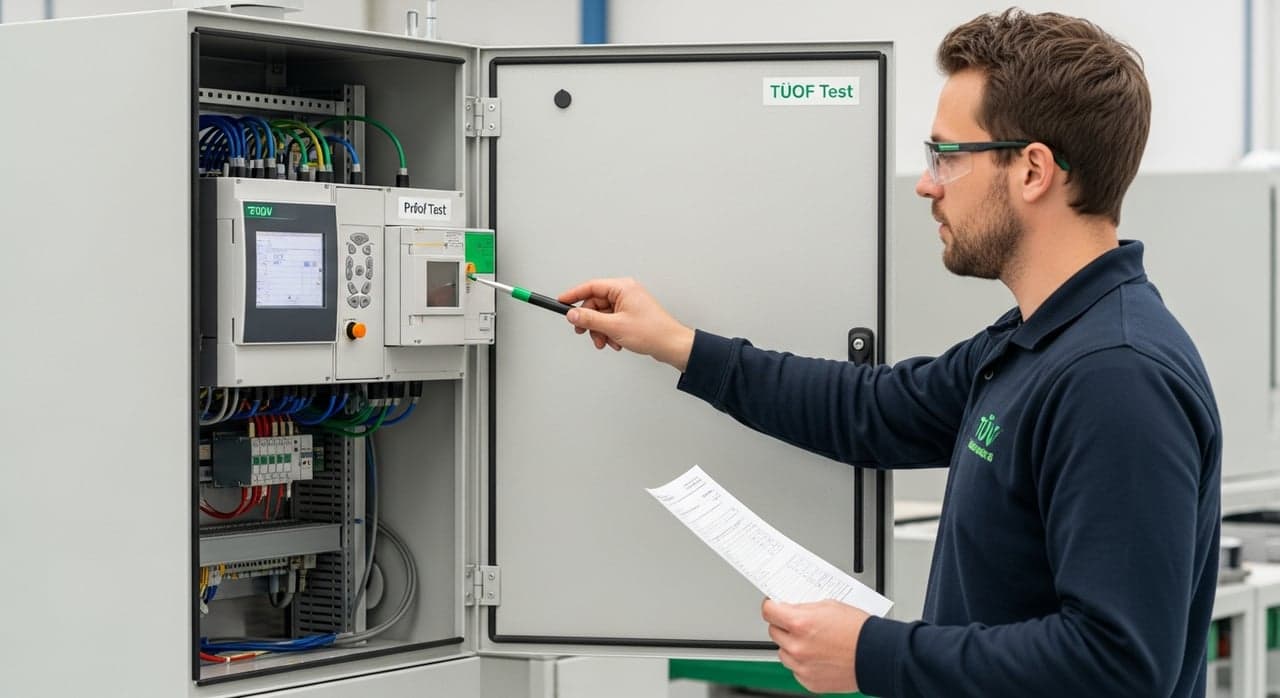
Safety PLC Engineering and Proof Test Procedures workflow
Define proof test scope per IEC 61511 Phase 14 covering each SIF with proof test interval (T1) from PFD calculation, identify revealed (DD) vs unrevealed (DU) failure modes per FMEDA, design test coverage to detect DU failures.
Author proof test procedure per SIF, sensor stimulus (calibrator, valve manifold), logic solver verification, final element actuation, end to end loop test, specify proof test coverage (PTC) percentage with documented justification, align with vendor Safety Manual.
Specify PST for SIL ≥2 SDV / BDV where applicable, calculate PST coverage (typically 60, 80% of DU failures), design online PST with monitoring of position time signature, integrate with diagnostic and maintenance workflow.
Specify bypass authorisation procedure per IEC 61511 Cl.11.8, operator role authorisation, mandatory compensating measures, time limit, audit log, design override management with annunciation, automatic timeout, and MOC trigger for extended override.
Design proof test record format with as found / as left values, failure findings, MOC triggers, specify electronic record keeping with IEC 61511 audit trail compliance, align with TÜV / exida FSA Stage 4 operational evidence requirement.
Periodically recalculate PFD with observed failure data, adjust proof test interval per IEC 61511 Cl.11.9 management of functional safety, trigger MOC for any SIF interval / coverage change, align with SIL register revalidation cycle.

Every deliverable from basis to handover
Complete Safety PLC Engineering and Proof Test Procedures scope covering every calculation, drawing, specification, and construction support activity.
Outcomes of Safety PLC Engineering and Proof Test Procedures
- We verify safety function integrity through structured proof tests
- We strengthen diagnostic coverage
- We reduce the risk of hidden failures
- We support the defence of the SIL claim
- We work to the IEC 61511 proof test requirements
- We support TÜV and exida verification
- We document the proof test records
- We give you records that hold up under safety system audit
- We optimise the proof test intervals
- We reduce nuisance trips during testing
- We reinforce management of change for PLC changes
- We underpin realistic competency for the test team
- We right size the proof test frequency
- We reduce business interruption caused by testing
- We lower spurious trip cost
- We support safety system asset management
Codes & standards we work to
Triggers that signal the need
Where Safety PLC Engineering and Proof Test Procedures applies
Tangible deliverables
- Safety PLC configuration documentation
- Application program review report
- Proof test procedure for each safety instrumented function
- Proof test interval calculation
- Bypass and override procedure
- Competency training package
Send us the scope
We will scope Safety PLC Engineering and Proof Test Procedures against your site and come back with what it would take. Send us the process conditions, the equipment list and the stage the design has reached.