Safety Requirement Specification (SRS) Development
We author a comprehensive SRS to IEC 61511 Clause 10
Safety Requirement Specification
(SRS) Development
The Safety Requirement Specification is the contract between the hazard analysis that established a safety function is needed and the engineering that will build it. Because every later lifecycle phase of design, verification, validation, and operation traces back to it, an incomplete or ambiguous SRS carries its defects through the entire SIS. IEC 61511 Clause 10 sets out what a complete specification must pin down for each Safety Instrumented Function, namely the safe state and the process safety time within which it must be reached, the demand mode and target SIL, the trip setpoints and required action, the response time, the reset and bypass philosophy, and the proof test interval and coverage that the SIL claim assumes. Our team authors the SRS as that single unambiguous source of truth, derived directly from your HAZOP and LOPA, testable, and free of the gaps that surface expensively at validation or, worse, at the first real demand.
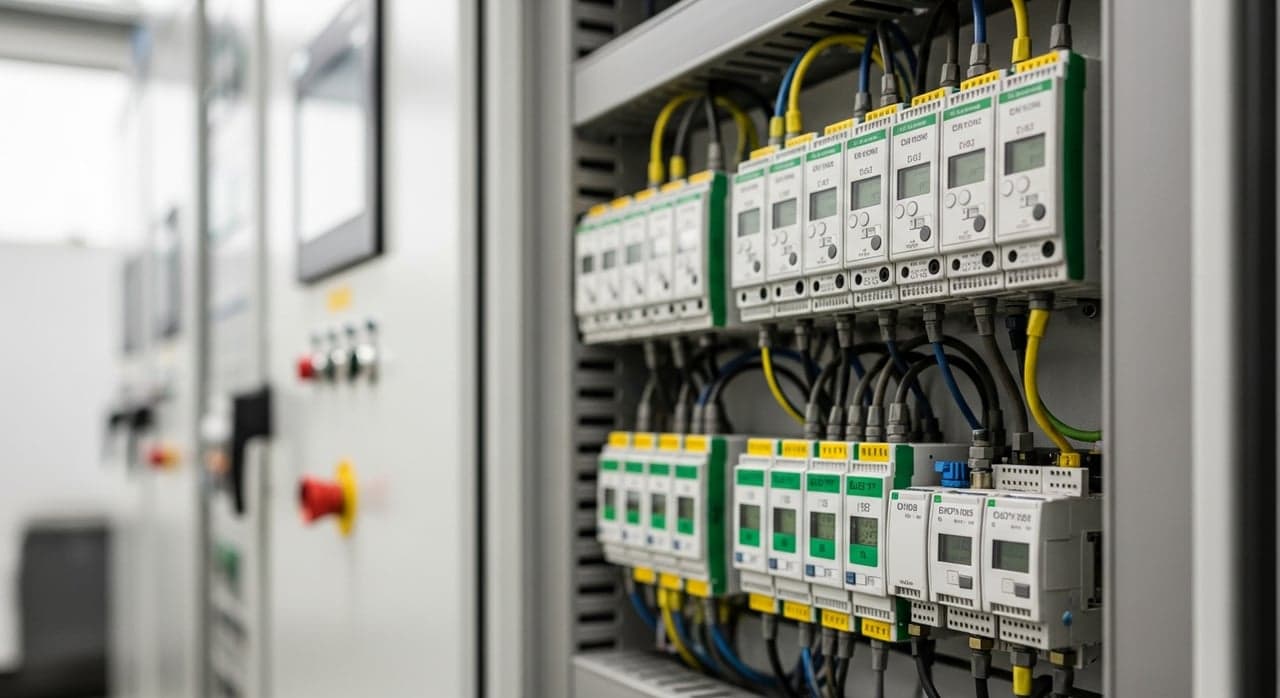
Safety Requirement Specification (SRS) Development workflow
Establish SRS scope per IEC 61511 Phase 5 covering all SIFs from PHA / SIL allocation, build SIF inventory with SIL target, demand mode, process safety time, and operating context, reference PHA / LOPA worksheet IDs for traceability.
Author functional requirements per SIF, sensor measurement parameter, trip setpoint, voting logic, time to action, final element action (close/open/trip), reset philosophy, override management, align with IEC 61511 Cl.10.3 mandatory requirements list.
Specify integrity requirements, SIL target, PFD/PFH allocation, response time, fault tolerance (HFT), SFF, diagnostic coverage, common cause factor, align with IEC 61508 architectural constraints (Route 1H or 2H).
Specify environmental requirements, temperature, humidity, EMC, vibration, area classification (ATEX zone), interface requirements with BPCS, alarm system, F&G, ESD, asset management, cybersecurity requirements per IEC 62443.
Define operational requirements, bypass/override authorisation, manual reset, proof test access, maintenance requirements, proof test interval, procedure references, MTTR target, competency requirements for operators and technicians.
Conduct multi discipline SRS review (process, instrumentation, operations, HSE, vendor) per IEC 61511 Cl.10.3, baseline SRS as Phase 5 deliverable, integrate with MOC for any subsequent change, align with FSA Stage 2 examination.

Every deliverable from basis to handover
Complete Safety Requirement Specification (SRS) Development scope covering every calculation, drawing, specification, and construction support activity.
Outcomes of Safety Requirement Specification (SRS) Development
- Provides traceable SIF requirements
- Confirms the process safety time is met
- Tightens proof test discipline
- Reduces the risk in SIF modifications
- Conforms to IEC 61511 Clause 10
- Documents the SIF requirements for audit
- Supports the defence of your SIL claim to the regulator
- Produces documentation that withstands customer scrutiny of the SIS
- Sharpens MOC for SIS modifications
- Improves operator and maintainer competency
- Supports the design of the DCS to SIS interface
- Standardises the SRS across your projects
- Avoids SIS rework caused by missing requirements
- Reduces commissioning and FAT cost
- Underpins realistic vendor pricing
- Strengthens long term SIS asset management
Codes & standards we work to
Triggers that signal the need
Where Safety Requirement Specification (SRS) Development applies
Tangible deliverables
- An SRS for each SIF
- A SIF inventory and boundary register
- Process safety time calculation worksheets
- A bypass and override philosophy
- A proof test procedure with its frequency
- Operational interface documentation
Send us the scope
We will scope Safety Requirement Specification (SRS) Development against your site and come back with what it would take. Send us the process conditions, the equipment list and the stage the design has reached.