Productivity Improvement
We find the one constraint that binds your output and target it, then re diagnose as the constraint moves
Productivity
Improvement
Every system has a single constraint that limits how much it can produce, and chasing improvements anywhere else rarely moves the needle. Our team applies Theory of Constraints, work study and operations analytics to identify the binding bottleneck, whether it sits in equipment, labour, material or a management decision, and we design targeted interventions that lift the productivity of the whole system. We focus relentlessly on that constraint and then diagnose again as the constraint shifts to a new place.

Our implementation model
A practical, phased delivery approach that runs from gap assessment through operational embedding and is built around your regulatory context.
Measure output per labour hour, equipment utilisation, throughput vs design, benchmark against industry top quartile.
Apply Theory of Constraints to identify primary bottleneck, equipment / labour / material / process / management decision.
Develop targeted hypotheses, automation, work redesign, training, equipment upgrade, layout change, estimate impact.
Pilot 2 to 3 highest impact interventions on representative work cells, measure performance against control.
Scale validated interventions across operations, standard work documentation, supervisor coaching, KPI tracking.
Embed daily management routines, shift huddles, performance boards, problem solving, to sustain gains.
Productivity in full scope
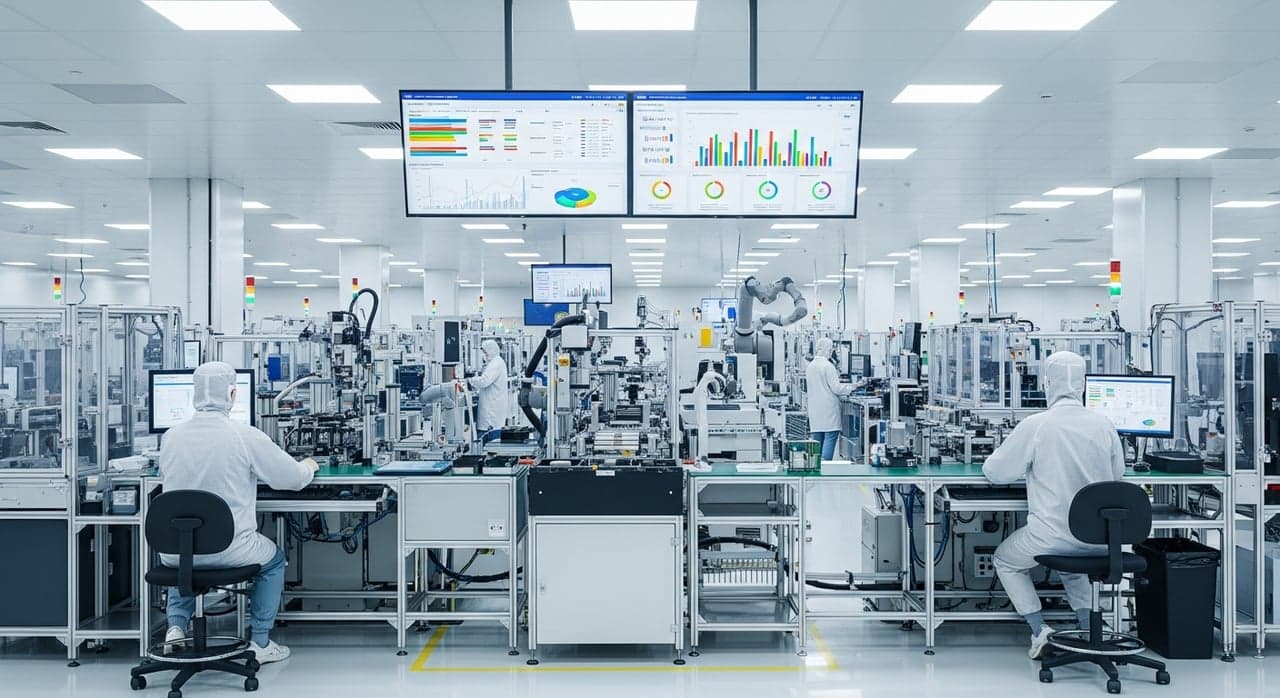
Value of Productivity Improvement
- Redesigned work improves ergonomics at the workstation
- Automation reduces physical strain on operators
- Standard work cuts the improvisation that leads to incidents
- A better managed pace means people are not forced to rush
- Work aligned with ILO ergonomic standards
- Productivity discipline measured against industry benchmarks
- Work measurement records you can defend confidently
- Working time that stays within labour law
- Productivity typically rises by 20 to 40 percent
- The throughput bound constraint is relieved
- Quality improves through standardisation
- You gain capacity headroom for growth
- Unit cost falls as volume rises
- You avoid spending capital on extra capacity
- Labour cost is used more effectively
- Overtime and contractor spend come down
Codes & standards we work to
Triggers that signal the need
Where Productivity Improvement applies
Wellheads, separators, gas compression, FPSO topsides, produced water systems.
Distillation columns, reactors, heat exchangers, storage spheres, LPG handling.
Cryogenic exchangers, liquefaction trains, BOG compressors, storage and sendout.
Reactive systems, batch reactors, solvent handling, runaway reaction scenarios.
Boilers, HRSGs, steam headers, hydrogen systems, ammonia SCR units.
Sterile vessels, CIP/SIP, pressure fermenters, solvent recovery, spray dryers.
Tangible deliverables
- Productivity baseline report
- Constraint and bottleneck map
- Intervention hypothesis register
- Pilot trial results
- Scaled rollout plan
- Daily management standard work
Ready to start your project?
Speak with our team to scope an engagement tailored to your facility, regulatory context, and lifecycle stage.