Improvement (ISO 45001 Clause 10)
Incidents, nonconformity, corrective action, and continual improvement
Improvement (ISO 45001
Clause 10)
Clause 10 closes the loop on the plan, do, check and act cycle, and our team helps you turn every incident and every shortfall into a system that quietly gets better. Under sub clause 10.1 you find the opportunities to improve and act on them so the system delivers the outcomes you want. Under 10.2 you respond to incidents and nonconformities, evaluate them for root cause, bring them under control, and decide on corrective action that stops them coming back, with outputs that include updated risks and opportunities, changes to the system, and communication to the people who need to know. Under 10.3 you keep improving how suitable, adequate and effective the system is over the long run. This clause is where the standard meets CCPS RBPS element 17 on incident investigation, element 18 on measurement, and element 20 on continuous improvement, and we make sure the learning travels across sites rather than staying where the event happened.
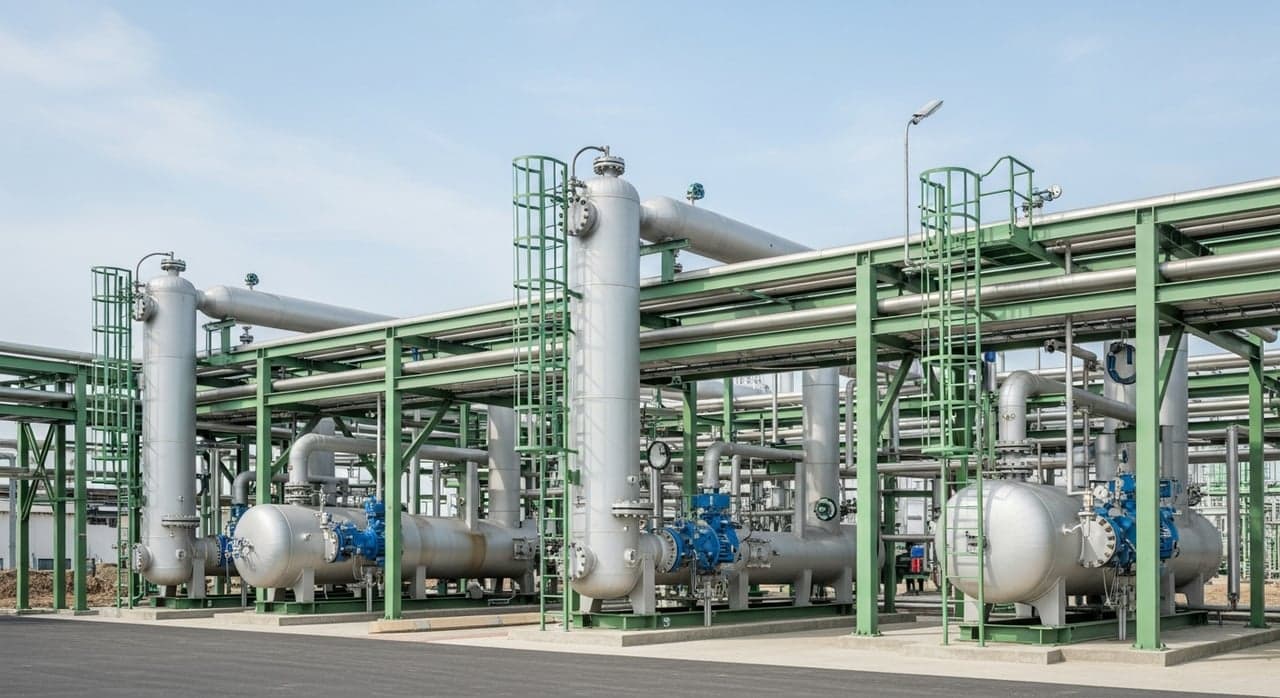
How the study is executed
A structured, facilitated process that runs from scope definition through close out and produces defensible, actionable outputs.
Per Cl.10.1, identify opportunities from Cl.9 outputs, stakeholder input, incident trending, peer benchmarking.
Per Cl.10.2, build incident / nonconformity reaction workflow, react, evaluate root cause, determine controls, implement corrective action.
Per Cl.10.2.1, apply RCA methods, TapRoot, Apollo, ECFC, reach latent / organisational / cultural causes, integrate with just culture.
Per Cl.10.2.2, design corrective actions per hierarchy of controls, verify effectiveness, specify monitoring KPIs.
Per Cl.10.3, continual improvement of suitability, adequacy, effectiveness, integrate with management review.
Share lessons learned across sites, integrate with ICCA / ACC industry wide learning, API RP 754 PSE indicators.

What the study covers in full
Outcomes of Improvement (ISO 45001 Clause 10)
- Verified action keeps the same problem from returning
- Root cause analysis reaches the deeper, latent causes
- Learning shared across sites stops one plant repeating another's mistake
- A clear signal of continual improvement
- Clear evidence that stands up to scrutiny against clause 10 of ISO 45001 2018
- Coverage of CCPS RBPS elements 17 and 20
- Compliance with OSHA PSM paragraph m
- Alignment with the incident reporting duty in section 88 of the Factories Act
- More near misses get reported as trust grows
- Tighter integration with management of change
- Operators who are more engaged in the system
- Improving process safety event indicators against API RP 754
- The cost of repeat incidents you never have
- Incidents avoided at sister sites through shared learning
- A stronger position should you ever face an insurer or a court
- A lift in your ESG rating
Codes & standards we work to
Triggers that signal the need
Where Improvement (ISO 45001 Clause 10) applies
Wellheads, separators, gas compression, FPSO topsides, produced water systems.
Distillation columns, reactors, heat exchangers, storage spheres, LPG handling.
Cryogenic exchangers, liquefaction trains, BOG compressors, storage and sendout.
Reactive systems, batch reactors, solvent handling, runaway reaction scenarios.
Boilers, HRSGs, steam headers, hydrogen systems, ammonia SCR units.
Sterile vessels, CIP/SIP, pressure fermenters, solvent recovery, spray dryers.
Tangible deliverables
- A register of improvement opportunities under clause 10.1
- An incident and nonconformity workflow under clause 10.2
- A root cause analysis methodology under clause 10.2.1
- Corrective action with effectiveness verification under clause 10.2.2
- A continual improvement plan under clause 10.3
- A protocol for sharing learning across the system
Ready to start your project?
Speak with our team to scope an engagement tailored to your facility, regulatory context, and lifecycle stage.