Hot Work Permit OSHA PSM 1910.119(k)
We run a permit that captures the fire prevention requirements for hot work on or near covered processes
Hot Work Permit
OSHA PSM 1910.119(k)
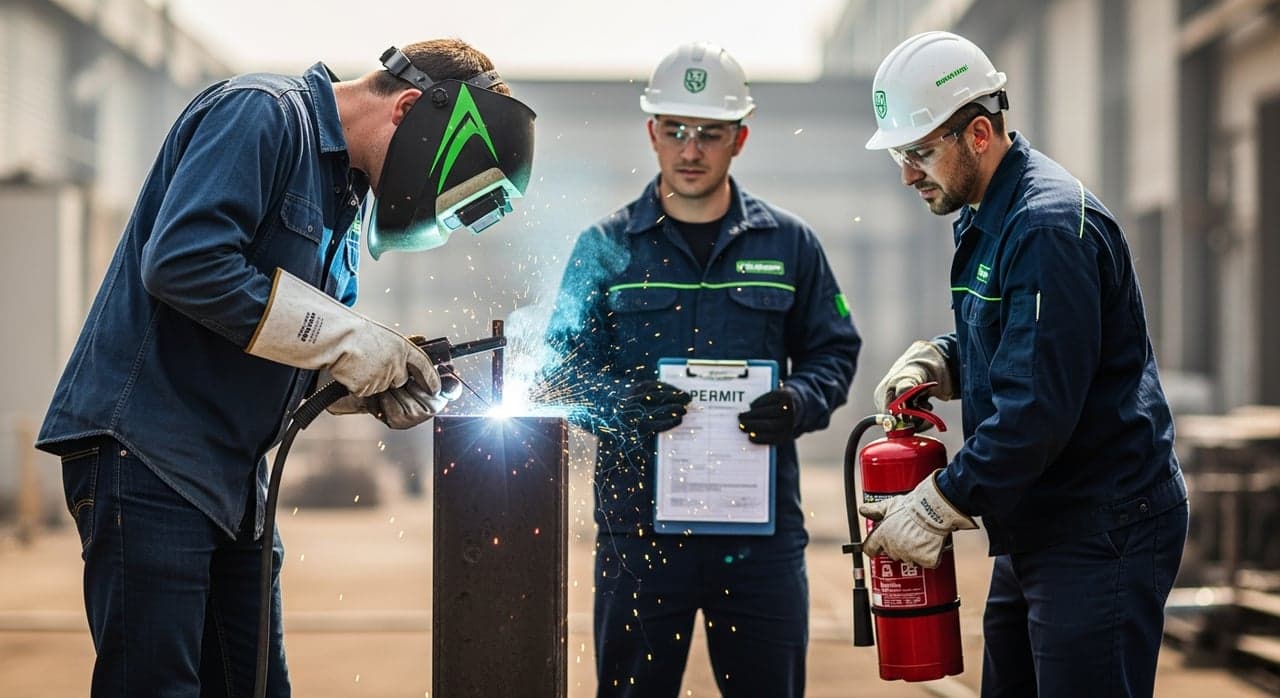
OSHA PSM 1910.119(k) is the safe work practice element written specifically for hot work, and it requires a permit whenever hot work is carried out on or near a covered process. Our team builds a permit that documents compliance with the fire prevention and protection requirements of 29 CFR 1910.252(a), records the dates the work is authorised, identifies the exact object the hot work will be performed on, and stays on file until the work is complete. The element exists because hot work, meaning welding, cutting, brazing, soldering and grinding, is statistically one of the most common ignition sources behind industrial fires. NFPA 51B is the consensus standard we work to, and India's OISD STD 105 covers the same ground for sites operating there.
How the study is executed
A structured, facilitated process that runs from scope definition through close out and produces defensible, actionable outputs.
Per (k), build hot work permit programme integrated with site PTW, align with NFPA 51B / OISD STD 105 India / API 2009.
Identify ignition sources nearby, flammable inventory, hazardous area boundaries, combustible materials, gas test LEL / O₂ / H₂S.
Per 29 CFR 1910.252(a), combustibles removal / shielding, sparks containment, water hose / extinguisher staged, align with NFPA 51B.
Trained fire watch during hot work, post work fire watch (typically 30 min minimum per NFPA 51B) after completion, permit signoff.
Per (k)(1), keep permit on file until completion, track issued vs closed permits, trend analysis for programme effectiveness.
Daily field audit, weekly permit quality audit, monthly programme review, integrate with incident investigation.

What the study covers in full
Outcomes of Hot Work Permit OSHA PSM 1910.119(k)
- Hot work fires prevented before they can start
- The spark to ignition pathway closed off
- A fire watch on hand for immediate response
- A post work watch that catches a slow developing ignition
- A documented record that defends your position under OSHA 1910.119(k) and 1910.252(a)
- Alignment with NFPA 51B and OISD STD 105
- Coverage that maps to CCPS RBPS Element 9
- Conformance with Factories Act Section 41B
- Less unplanned downtime caused by hot work incidents
- Tighter integration with contractor permit to work systems
- Sharper supervisor engagement in the field
- A traceable and defensible work record
- Avoidance of fire incident cost that often runs into the millions
- A defensible record your insurer can rely on
- Lower workers compensation exposure
- Protection of ongoing productivity
Codes & standards we work to
Triggers that signal the need
Where Hot Work Permit OSHA PSM 1910.119(k) applies
Wellheads, separators, gas compression, FPSO topsides, produced water systems.
Distillation columns, reactors, heat exchangers, storage spheres, LPG handling.
Cryogenic exchangers, liquefaction trains, BOG compressors, storage and sendout.
Reactive systems, batch reactors, solvent handling, runaway reaction scenarios.
Boilers, HRSGs, steam headers, hydrogen systems, ammonia SCR units.
Sterile vessels, CIP/SIP, pressure fermenters, solvent recovery, spray dryers.
Tangible deliverables
- A hot work permit template aligned with (k) and NFPA 51B
- A pre work hazard assessment checklist
- A specification of the required fire prevention measures
- A fire watch competency and training package
- A permit file retention procedure
- A programme audit protocol
Ready to start your project?
Speak with our team to scope an engagement tailored to your facility, regulatory context, and lifecycle stage.