Understanding Hazards and Risks (Responsible Care Element 2)
We identify and quantify the hazards of your materials, processes, and facilities across the whole product lifecycle, not just inside the fence
Understanding Hazards and Risks
(Responsible Care Element 2)
Responsible Care Element 2, Understanding Hazards and Risks, asks signatory companies to identify, evaluate, and manage the hazards that run across the entire chemicals lifecycle. The element lines up with CCPS RBPS Pillar 2 on understanding hazards and risk, and our team brings the full hazard study toolkit to bear, from material safety assessment through process hazard analysis using HAZOP, What If, and FMEA, on to facility risk assessment using quantitative risk assessment, fire and explosion risk analysis, and occupied building risk assessment, alongside human factors analysis and lifecycle hazard evaluation under REACH and GHS. What sets this element apart from a purely site based framework such as OSHA 1910.119 is that it reaches well beyond the plant boundary. We look at the hazards your suppliers carry, the risk created in transport, the conditions under which your customers use the product, and what happens at end of life disposal, so that you understand risk across the whole value chain rather than only within your own gates.
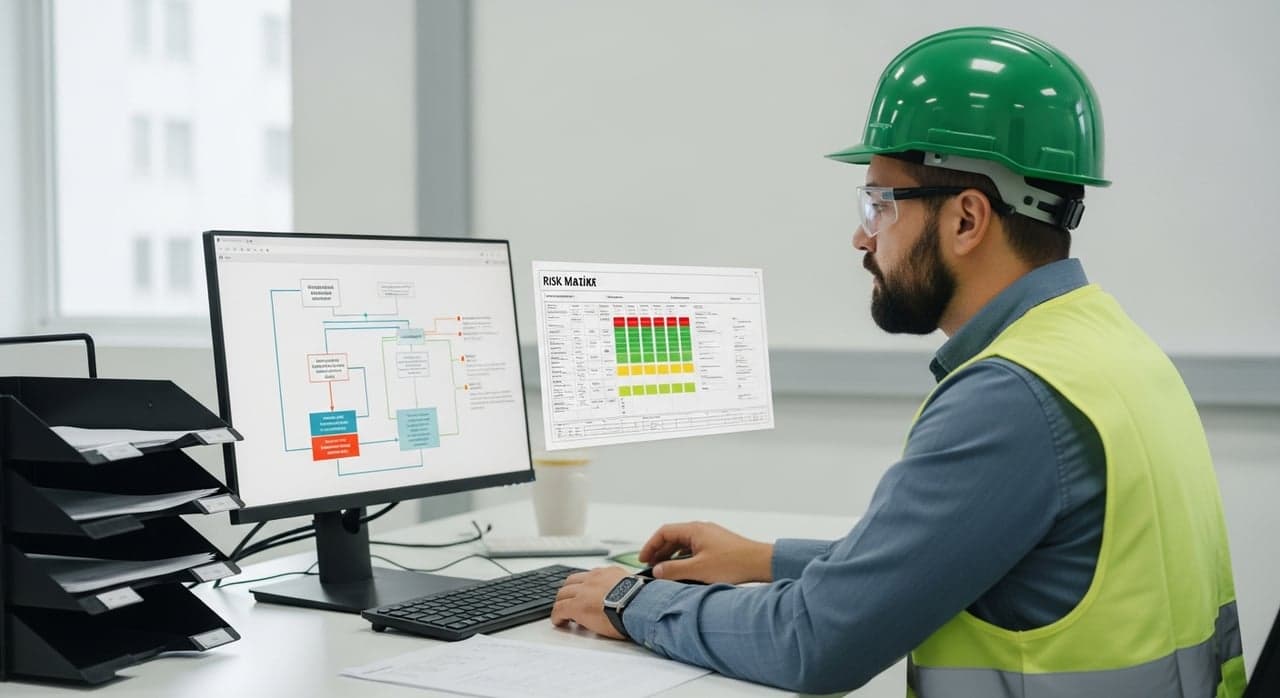
How the study is executed
A structured, facilitated process that runs from scope definition through close out and produces defensible, actionable outputs.
Map hazards across raw material → process → product → distribution → use → end of life, align with REACH / GHS / IFC PS lifecycle thinking.
Build HAZOP / What If / FMEA programme per process complexity, align with OSHA PSM (e) / CCPS RBPS Element 7.
QRA / FERA / OBRA per credible worst case scenario, integrate with Bow Tie barrier register.
Supplier ESG audit, transport risk assessment, customer use condition review, align with ISO 20400 sustainable procurement.
HRA per THERP / HEART, integrate with operator competency programme and operating procedure design.
Per REACH / CSRD / TNFD lifecycle disclosure, integrate with product stewardship and ESG reporting.

What the study covers in full
Outcomes of Understanding Hazards and Risks (Responsible Care Element 2)
- You gain visibility of hazards across the lifecycle, not just inside the fence
- Hazard analysis drives the engineered safeguards you actually need
- Quantitative and fire and explosion analysis put real numbers on the consequences
- Human factor failure pathways are understood and managed
- A defensible position for Element 2 under RC14001 2015
- Conformance with CCPS RBPS Pillar 2
- Coverage of REACH, GHS, and the IFC Performance Standards
- Alignment with the hazard analysis duty in OSHA PSM paragraph (e)
- Operability findings that improve how the plant runs
- A defensible basis for revisiting management of change decisions
- Stronger management of supplier and contractor risk
- Genuine product stewardship across the lifecycle
- You reduce your exposure to product liability
- You hold a defensible position with your insurers
- You build better relationships with suppliers and customers
- You strengthen your ESG rating
Codes & standards we work to
Triggers that signal the need
Where Understanding Hazards and Risks (Responsible Care Element 2) applies
Wellheads, separators, gas compression, FPSO topsides, produced water systems.
Distillation columns, reactors, heat exchangers, storage spheres, LPG handling.
Cryogenic exchangers, liquefaction trains, BOG compressors, storage and sendout.
Reactive systems, batch reactors, solvent handling, runaway reaction scenarios.
Boilers, HRSGs, steam headers, hydrogen systems, ammonia SCR units.
Sterile vessels, CIP/SIP, pressure fermenters, solvent recovery, spray dryers.
Tangible deliverables
- A hazard lifecycle map
- A hazard analysis programme using HAZOP, What If, and FMEA
- A facility risk assessment using QRA, fire and explosion risk analysis, and occupied building risk assessment
- A value chain hazard register
- A human reliability analysis using THERP and HEART
- A lifecycle disclosure pack
Ready to start your project?
Speak with our team to scope an engagement tailored to your facility, regulatory context, and lifecycle stage.