Earthing and Bonding Verification and Testing
We measure what the earthing system actually achieves, covering soil resistivity, grid resistance, touch and step potential and bonding continuity, and compare it against what the design assumed
Earthing and Bonding
Verification and Testing
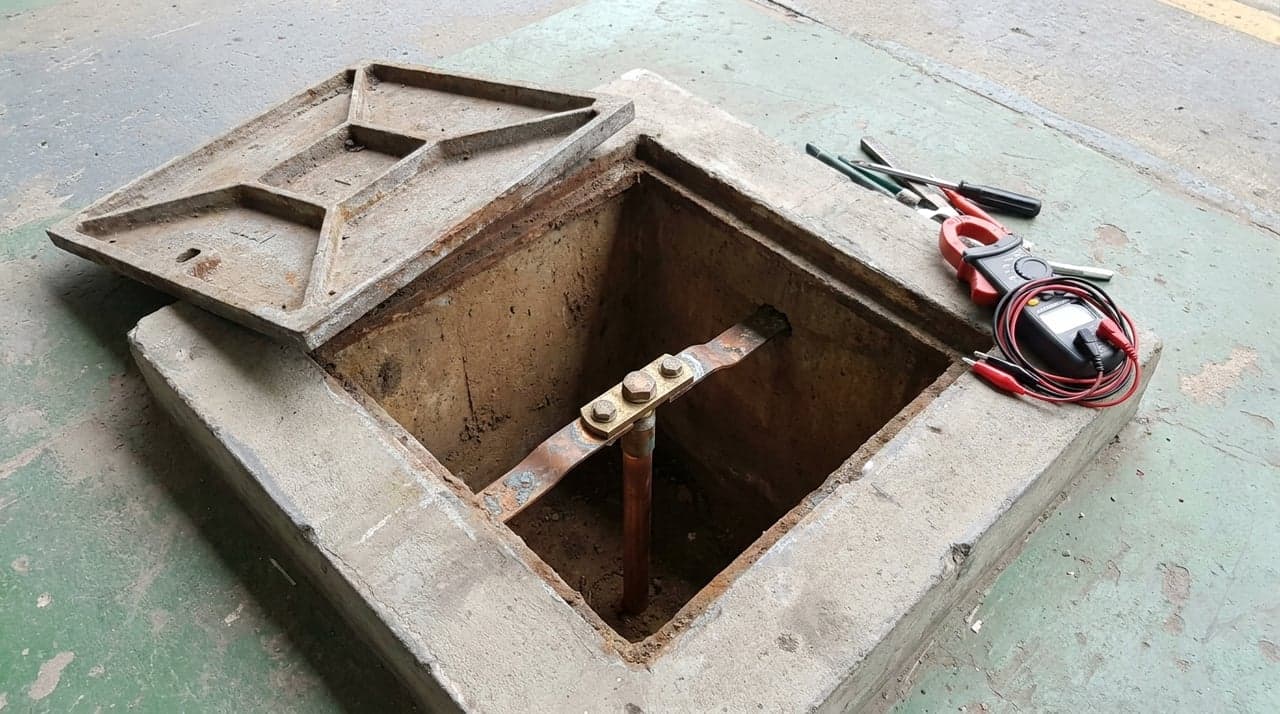
An earthing system is designed on assumed soil resistivity and verified almost nowhere. The design calculation produces a grid resistance and a set of touch and step potentials that are safe for a stated fault current and clearing time, and then the system is installed into ground that may not match the assumption, corroded over a decade, and extended by additions that were never tied back into the grid. Our work is the measurement side of that: soil resistivity by Wenner array, grid resistance by fall of potential, touch and step voltage measurement where the calculation is marginal, and continuity testing on the bonding that ties structures, equipment and cable armour into the system. We compare what we measure against what the design assumed and against the clearing time the protection actually delivers, since a touch potential that is safe at 200 milliseconds may not be at the clearing time a poorly coordinated relay gives you. Where the system falls short we specify the remedial work, and where it does not we say so, which is a useful thing to be able to prove.
Earthing and Bonding Verification and Testing workflow
Agree study objectives, boundaries, data requirements, and deliverable format with the client team.
Compile existing documentation, drawings, incident records, and relevant operational data.
Apply the relevant analytical method to assess hazards, risks, or system performance against criteria.
Identify key assumptions, test sensitivity of results, and document uncertainty bounds.
Compare results against risk criteria, demonstrate ALARP or identify further risk reduction measures.
Issue traceable report with findings, prioritised recommendations, and a management action register.

Every deliverable from basis to handover
Complete Earthing and Bonding Verification and Testing scope covering every calculation, drawing, specification, and construction support activity.
Outcomes of Earthing and Bonding Verification and Testing
- We establish the touch and step potentials that actually exist
- We find the bonding that was never connected or has since corroded
- We confirm the earth path a protective device depends on
- We identify where a later addition was left off the grid
- We measure to IEEE 81 and assess to IEEE 80
- We verify against IS 3043 for Indian installations
- We support the CEA Regulations obligation on earthing
- We provide the verification record IEC 60364 6 expects
- We resolve the nuisance tripping a poor earth reference causes
- We separate instrument and power earths where they have been merged
- We give the maintenance team a measured baseline to trend against
- We identify degradation before it becomes a fault
- We target remedial earthing at the sections that fail the measurement
- We avoid replacing a grid that measurement shows is adequate
- We reduce equipment damage from poor fault current return
- We support insurance and audit positions with measured data
Codes & standards we work to
Triggers that signal the need
Where Earthing and Bonding Verification and Testing applies
Tangible deliverables
- Soil resistivity survey with Wenner array results and interpreted soil model
- Grid resistance measurement by fall of potential with the test curve
- Touch and step potential measurement where assessed
- Bonding continuity test record by structure and equipment item
- Comparison of measured performance against design assumption and protection clearing time
- Non conformance register with remedial specification
- Retest scope and interval recommendation
Send us the scope
We will scope Earthing and Bonding Verification and Testing against your site and come back with what it would take. Send us the process conditions, the equipment list and the stage the design has reached.