Static Electricity Hazard Assessment and Control
We identify where charge accumulates in your operations, assess whether the discharge energy can ignite the atmosphere present, and specify the bonding, earthing and operating limits that remove the path
Static Electricity Hazard
Assessment and Control
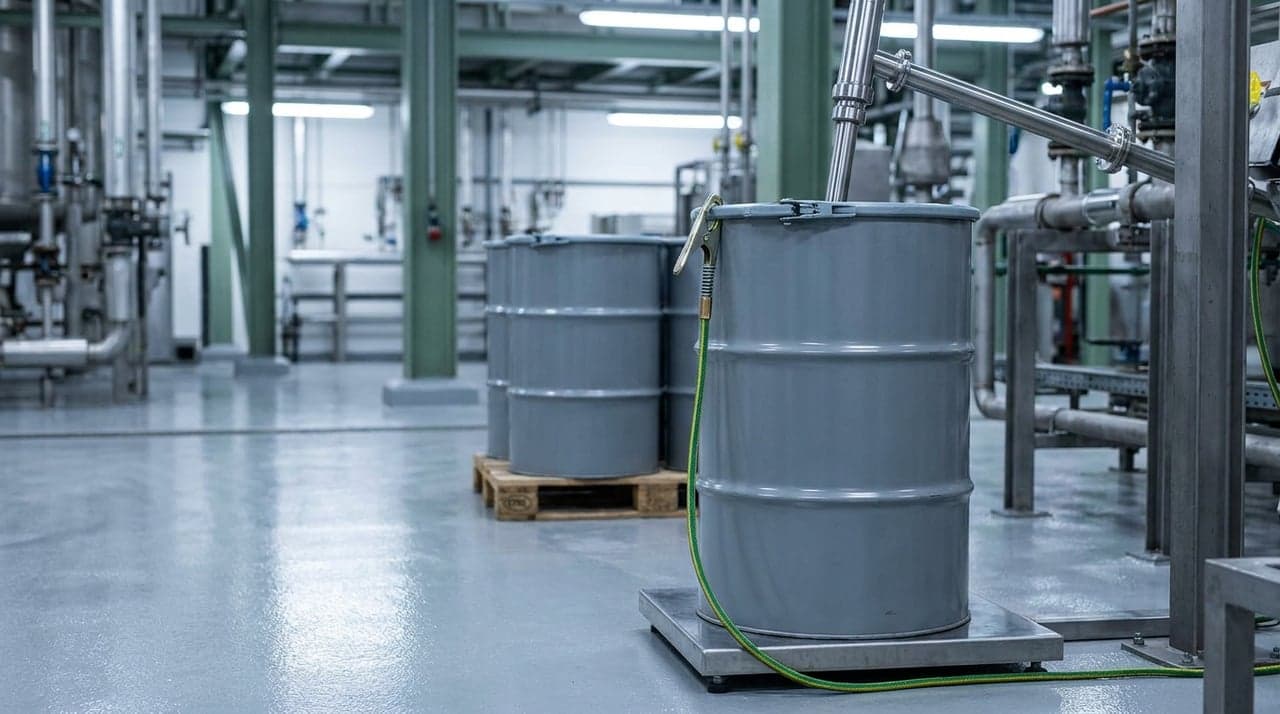
Static ignition is a recurring cause of fire and explosion in liquid and powder handling, and it is a hazard that ordinary earthing practice does not address. Charge is generated by flow, by splash filling, by pneumatic conveying and by the movement of people and plant, and whether it becomes an ignition source depends on the charge relaxation of the material, the geometry of the accumulation and the minimum ignition energy of the atmosphere it discharges into. Our assessment works through the operations where charge is generated, establishes the conductivity and relaxation behaviour of the materials handled, identifies the discharge types that are credible in each geometry, from spark through brush and propagating brush to the cone discharges that occur in silos, and compares the energy available against the minimum ignition energy of the vapour or dust present. The controls that follow are mostly not equipment. They are bonding and earthing arrangements, fill rate limits, dip pipe and splash filling changes, material and liner selection, and operating practice on drum filling, sampling and manual charging, which is where the human element makes the ignition path.
Static Electricity Hazard Assessment and Control workflow
Agree study objectives, boundaries, data requirements, and deliverable format with the client team.
Compile existing documentation, drawings, incident records, and relevant operational data.
Apply the relevant analytical method to assess hazards, risks, or system performance against criteria.
Identify key assumptions, test sensitivity of results, and document uncertainty bounds.
Compare results against risk criteria, demonstrate ALARP or identify further risk reduction measures.
Issue traceable report with findings, prioritised recommendations, and a management action register.
Every deliverable from basis to handover
Complete Static Electricity Hazard Assessment and Control scope covering every calculation, drawing, specification, and construction support activity.
Outcomes of Static Electricity Hazard Assessment and Control
- We remove the ignition path in filling, sampling and charging operations
- We match control to the minimum ignition energy actually present
- We find the bonding gaps on portable and temporary equipment
- We address the discharge types ordinary earthing does not prevent
- We assess to API RP 2003, NFPA 77 and IEC 60079 32 1
- We support the ignition source review a DSEAR position requires
- We align with dust hazard analysis findings
- We document the basis for each control selected
- We set fill rates and procedures operators can actually follow
- We specify liner, hose and container types by service
- We connect the findings to the permit and operating procedures
- We give maintenance a bonding continuity check regime
- We avoid inerting where bonding and rate control are sufficient
- We prevent the loss a single static ignition carries
- We specify container and liner selection that avoids repeat exposure
- We target control at the operations where charge actually accumulates
Codes & standards we work to
Triggers that signal the need
Where Static Electricity Hazard Assessment and Control applies
Tangible deliverables
- Charge generation inventory by operation
- Material conductivity and relaxation data review
- Credible discharge type assessment by geometry
- Comparison of discharge energy against minimum ignition energy
- Bonding and earthing specification for fixed and portable equipment
- Fill rate, dip pipe and splash filling control specification
- Container, liner and hose selection guidance by service
- Operating procedure and permit input covering sampling and manual charging
Send us the scope
We will scope Static Electricity Hazard Assessment and Control against your site and come back with what it would take. Send us the process conditions, the equipment list and the stage the design has reached.