Business Continuity and Disaster Recovery Planning
ISO 22301 and ISO 22361 BCM engineered for a post pandemic, cyber physical, and supply chain fragile operating environment
Business Continuity and Disaster
Recovery Planning
Business Continuity Management has become a board level concern in the wake of COVID 19, Colonial Pipeline in May 2021 with its 4.4 million dollar ransom and six day East Coast fuel disruption, Suez in 2021, the Texas freeze in 2021, Norsk Hydro in 2019, and the steady rhythm of cyber physical, climate driven, and geopolitical disruptions. ISO 22301 from 2019 codifies the management system, ISO 22361 from 2022 adds the crisis management discipline, ISO 27031 covers ICT business continuity, ISO 31000 anchors risk management, and NIST SP 800 34 and 800 184 cover IT disaster recovery. Modern BCM execution rests on a Business Impact Analysis that quantifies financial, regulatory, contractual, reputational, and human safety impact at 1 hour, 4 hour, 24 hour, 72 hour, 7 day, and 30 day disruption durations, on Recovery Time Objective and Recovery Point Objective definition for each critical process, on recovery strategy selection covering hot, warm, and cold site, geographic diversification, supplier redundancy, manual workaround, and cloud failover, and on quarterly exercise programmes that genuinely test the plan rather than merely rehearse it. The cyber resilience overlay of the 2020s through CISA, NIST CSF 2.0, the EU NIS2 Directive of 2023, and the India CERT In Rules has made ICT BCM integration mandatory rather than optional, and our team builds it into your programme from the start.

How the study is executed
We open at business impact analysis (bia) and close at bcp certification & continuous improvement, and each stage hands the next one a record rather than a summary of it.
Conduct BIA per ISO 22301, identify critical business functions, dependencies (people, technology, supply chain, facilities), Maximum Tolerable Period of Disruption (MTPD), Recovery Time Objective (RTO), Recovery Point Objective (RPO).
Conduct BCP risk assessment per ISO 22301 / 22317, natural hazards (earthquake, flood, storm), technological (cyber, infrastructure failure), human (pandemic, labour action), regulatory (sanctions, certification loss), align with corporate ERM.
Design recovery strategies, alternate site (hot / warm / cold), workforce relocation, supply chain backup, IT failover, telecommunications, specify per critical function with RTO / RPO targets, align with corporate IT DR plan.
Author BCP documentation per ISO 22301, policy, scope, recovery strategy, plan activation, communications, recovery procedures, return to normal, integrate with corporate ERM, crisis management, and emergency response.
Design exercise programme, desktop walkthrough (quarterly), tabletop (annual), simulation (biennial), full recovery (triennial), specify independent observer team and after action review, align with ISO 22301 testing requirement.
Achieve ISO 22301 certification through third party audit, specify continuous improvement cycle, exercise findings, post incident review, environmental change, integrate with corporate management review.
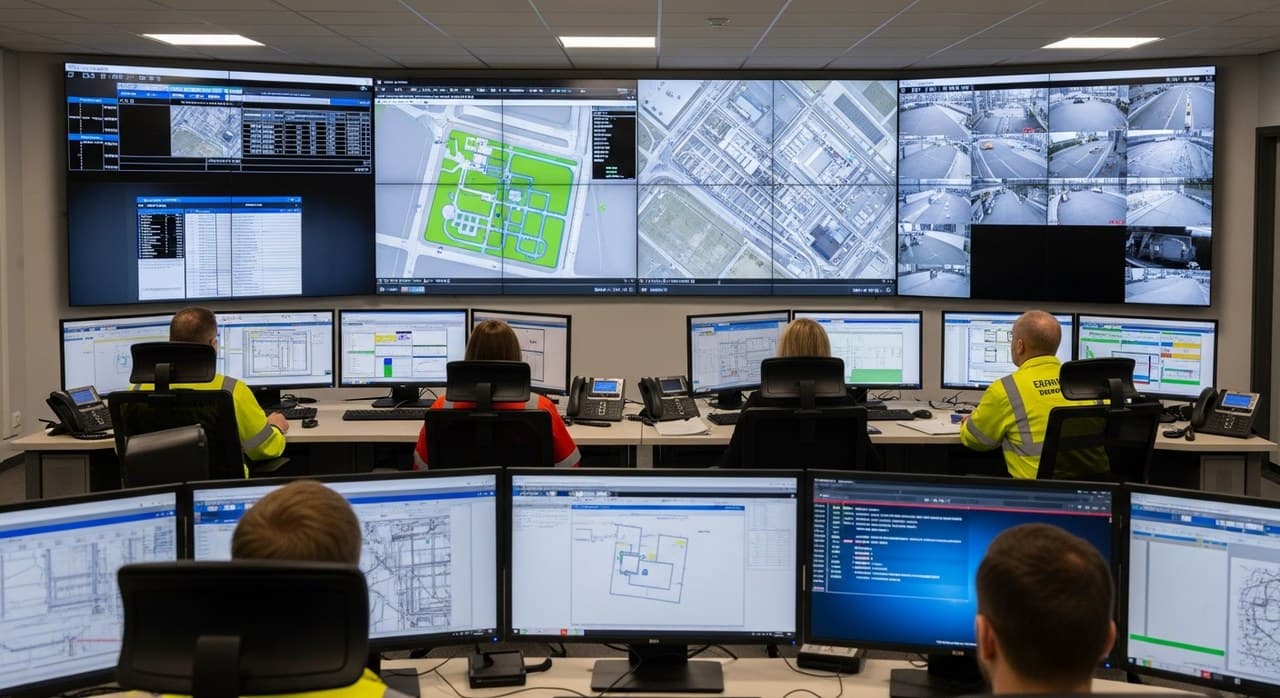
What the study covers in full
Outcomes of Business Continuity and Disaster Recovery Planning
- We maintain critical safety services and HSE response during disruption
- We strengthen crisis management coordination
- We protect workforce and community wellbeing through a structured response
- We reduce cascading failure risk across interdependent systems
- We deliver a BCM management system ready for ISO 22301 (2019) certification
- We integrate ISO 22361 crisis management
- We align you with EU NIS2, India CERT In, and US CISA expectations
- We support your ESG disclosure on resilience and operational continuity
- We reduce downtime duration through a structured response
- We strengthen supplier and customer dialogue on continuity
- We improve IT and OT recovery capability through documented playbooks
- We support M&A resilience integration
- We minimise business interruption loss, typically a 30 to 50 percent recovery time reduction
- We quantify business interruption risk for your insurer to assess
- We shorten the recovery window your customer commitments depend on
- We support premium pricing on resilient supply commitments
Codes & standards we work to
Triggers that signal the need
Where Business Continuity and Disaster Recovery Planning applies
Tangible deliverables
- BIA report with criticality ranking and MTPD
- RTO and RPO matrix for each critical process
- BCP and DR plan suite with role based playbooks
- ICT BCM and cyber resilience integration plan
- Supply chain dependency map and continuity strategy
- Crisis management integration framework
- Exercise programme across tabletop, functional, and full scale
- Continuous improvement governance per ISO 22301 Clause 10
- Management review pack template
Send us the scope
We will scope Business Continuity and Disaster Recovery Planning against your site and come back with what it would take. Send us the unit, the P&ID revision it sits at and the inventory it holds.