Emergency Command Centre Design and Setup
Purpose built ECC engineering that survives blast, fire, and toxic events, stays habitable for 96 hours, and is organised around ICS
Emergency Command Centre
Design and Setup
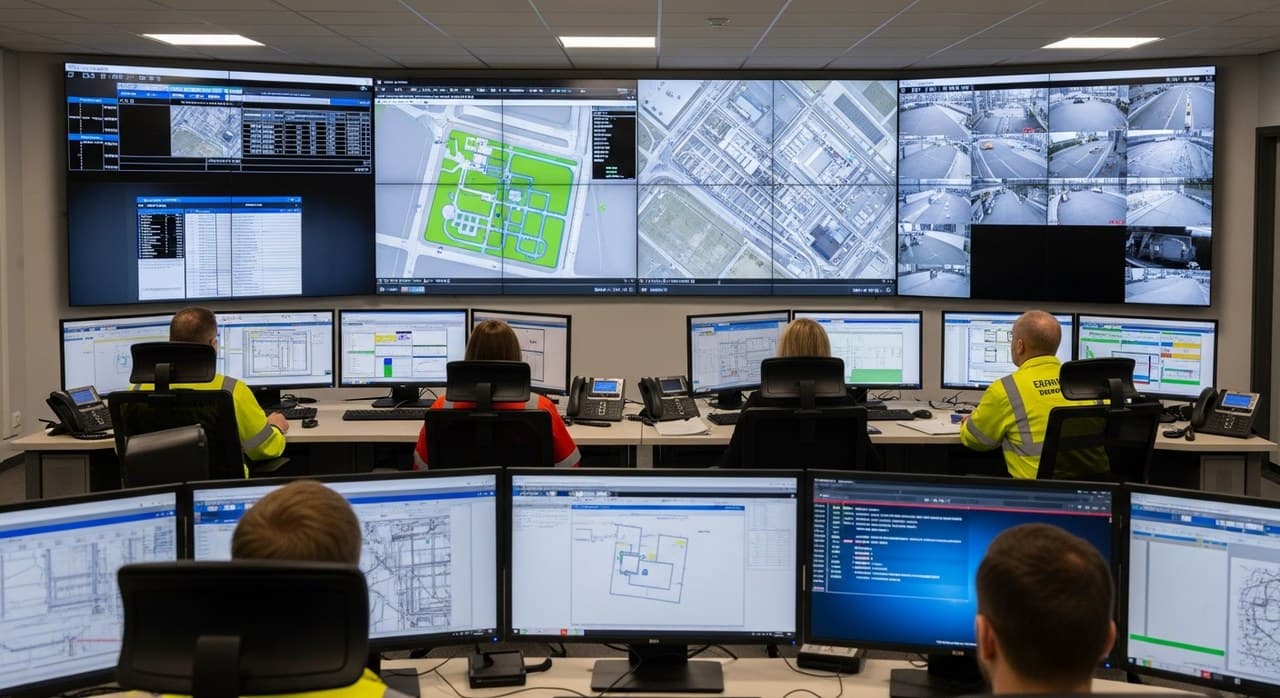
An Emergency Command Centre is the engineered facility from which an incident commander, the planning section, the operations section, and the logistics function manage the response to a major event such as a fire, explosion, toxic release, cyber incident, weather emergency, or security event. The discipline combines siting and survivability analysis that places the facility outside credible blast, fire, and toxic envelopes per API RP 752 and 753, structural and architectural design that is typically blast resistant per the ASCE Petrochemical Energy Committee, a full ICS organisation layout covering the Incident Commander, Section Chiefs, Unit Leaders, Communications, and Documentation, redundant communications across primary fibre, microwave and satellite backup, cellular, HF and VHF radio, and public PSTN, live data integration with mirrored DCS and SCADA, the fire and gas HMI, CCTV, weather, AIS and GIS, and social media monitoring, power and HVAC engineered for 96 hour autonomous operation, decision support tools spanning incident management software, mapping, and plume modelling integration, and habitability with workstations, a rest area, and food, water, and sanitation for 72 hour sustained response. The period since Deepwater Horizon and the increasing frequency of multi day major events such as Husky Superior in 2018, Beirut in 2020, and the Texas freeze in 2021 have made the 96 hour autonomous ECC the industry baseline expectation for high hazard facilities, and our team designs to that baseline.
How the study is executed
We open at ecc functional requirement brief and close at ecc commissioning & drill validation, and each stage hands the next one a record rather than a summary of it.
Define ECC functional requirements per NFPA 1561 / FEMA NIMS, workstation count (per ICS section), display infrastructure (CCTV, GIS, weather), communications (radio, telephone, satellite, video), redundancy strategy (primary / alternate / mobile).
Site ECC outside credible worst case hazard footprint per FERA / QRA blast and toxic contour, specify blast resistant construction per API 752, toxic refuge per CCPS Toxic Releases, design redundant utilities (power, HVAC, comms).
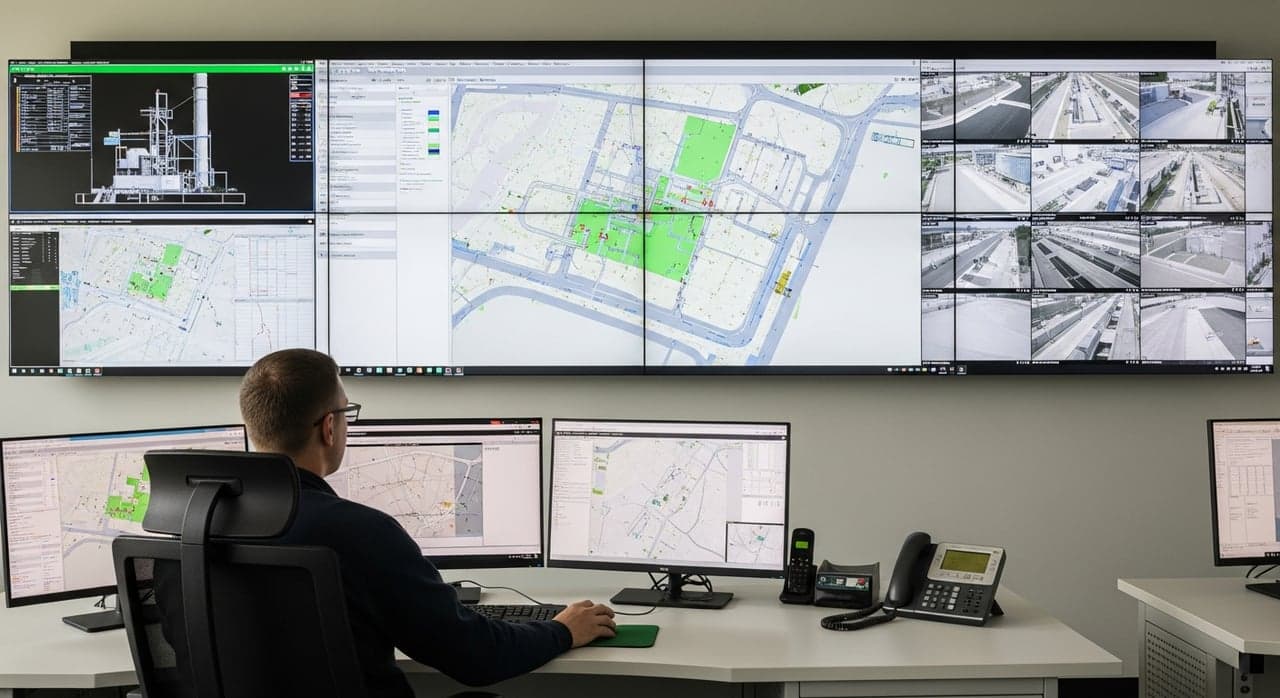
Specify operator workstations per ICS role, Incident Commander, Operations, Planning, Logistics, Finance, design video wall with CCTV feeds, GIS situational awareness, weather radar, align with ergonomics and human factors guidance.
Design communications, radio (UHF / VHF / digital), telephone (PSTN, mobile, satellite), video conferencing (mutual aid, regulator interface), public address, specify redundancy and EMC / electrical isolation per NFPA 1221.
Design alternate ECC location (typically off site) with same functional capability, design mobile command vehicle for forward command in distributed incidents, specify hot / warm / cold standby transition procedure.
Commission ECC with functional acceptance test, all systems operational under simulated load, validate via drill (tabletop, functional, full scale), align with NFPA 1561 / NIMS / ICS standards.
What the study covers in full
Outcomes of Emergency Command Centre Design and Setup
- We provide a command location that survives blast, fire, and toxic events under credible major scenarios
- We sustain response operations across a 96 hour autonomous duration
- We reduce decision latency through co location and live data integration
- We anchor cross function coordination under crisis conditions
- We deliver NIMS and ICS organisation that holds up to audit
- We document ECC capability for the COMAH safety case and EPA RMP
- We align with the NFPA 1221, NFPA 1600, and ISO 22320 frameworks
- We withstand underwriter, insurance broker, and AHJ examination
- We standardise ECC layout across multi site portfolios
- We sharpen drill realism by testing the actual ECC under load
- We strengthen mutual aid and external agency integration
- We support leadership continuity through extended events
- We reduce incident escalation and business interruption duration
- We help you avoid retrofit cost from late stage ECC design gaps
- We support your underwriter dialogue with quantified capability evidence
- We optimise shared services design across multi site groups
Codes & standards we work to
Triggers that signal the need
Where Emergency Command Centre Design and Setup applies
Tangible deliverables
- ECC design basis with siting and survivability analysis
- API RP 752 occupied building assessment for the ECC location
- ASCE PEC blast resistance specification
- ICS organisation layout drawings and equipment schedule
- Communication and data architecture diagram
- Power, HVAC, and habitability design for 96 hour autonomy
- Primary, alternate, and mobile ECC strategy
- SOPs covering activation through demobilisation
- ECC drill and exercise programme
Send us the scope
We will scope Emergency Command Centre Design and Setup against your site and come back with what it would take. Send us the unit, the P&ID revision it sits at and the inventory it holds.