Cryogenic Process Safety Engineering
LNG, LH2, LOX, LIN, and NH3 safety engineering built around brittle fracture, RPT, BLEVE, and cold dispersion physics
Cryogenic Process
Safety Engineering
Cryogenic safety engineering has moved from an LNG niche discipline into the mainstream chemical industry as the hydrogen economy, ammonia bunkering, and decarbonised heavy industry scale up. Liquid hydrogen stores at 20 K, which is minus 253 degrees Celsius, LNG at 112 K, which is minus 161 degrees Celsius, liquid oxygen at 90 K, which is minus 183 degrees Celsius, and liquid nitrogen at 77 K, which is minus 196 degrees Celsius, and each carries chemistry specific hazards. These include brittle fracture of carbon steel below the minus 46 degree Celsius ductile to brittle transition of the Aberfan 1966 class, Rapid Phase Transition explosions when LNG contacts water as at Skikda in 2004, Boiling Liquid Expanding Vapour Explosion on confined cryogenic vessels as at Feyzin in 1966, oxygen enrichment in cold trap zones that causes material auto ignition, hydrogen embrittlement of steels and brass alloys, ammonia toxicity in liquid releases, and asphyxiation in vented enclosures as at Tata Tinplate in 2010 and in multiple liquid nitrogen incidents. Modern execution combines NFPA 59A for LNG, the 2024 NFPA 2 Hydrogen Technologies revision, API 625 and EN 14620 for refrigerated storage tank double containment, ISO 20088 for cryogenic spill protection on PFP, CGA G 2 for ammonia, and the post Fukushima era treatment of liquid hydrogen rollover and boil off gas management, and our team brings all of it to your facility.
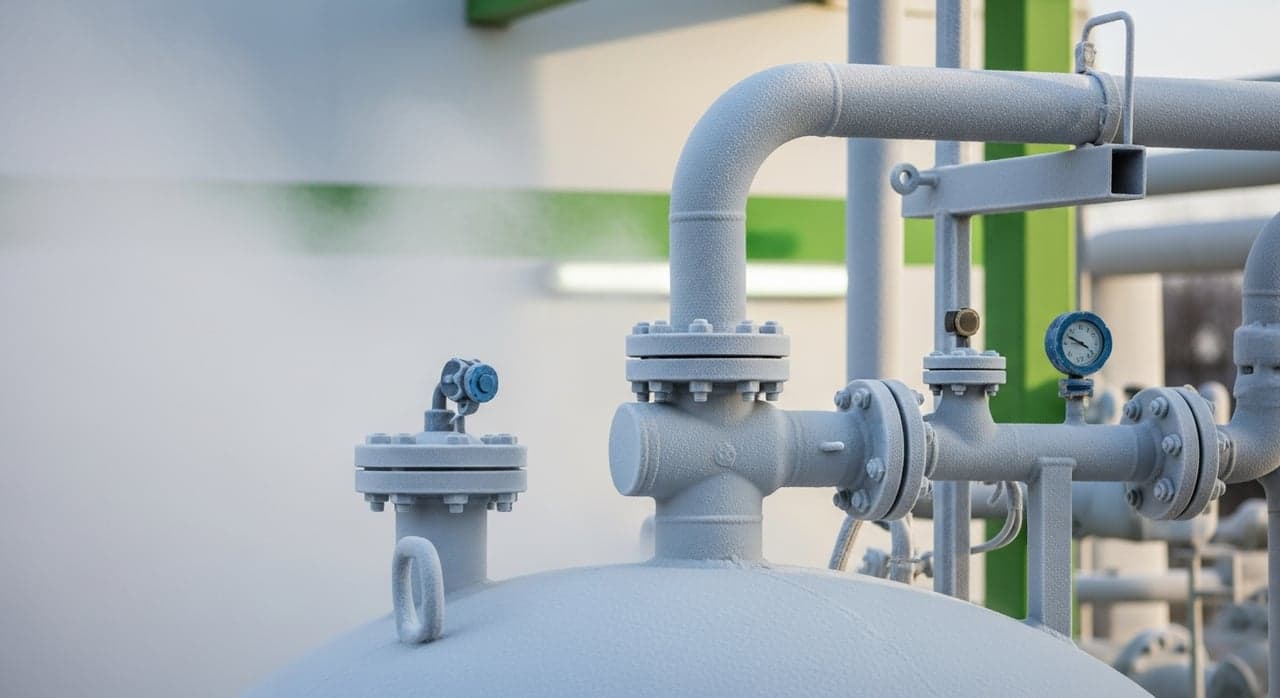
Cryogenic Process Safety Engineering workflow
Catalogue cryogenic hazards, cold burn, asphyxiation (LO₂ / LN₂ displacement), embrittlement, expansion (1 600+ liquid to gas ratio), specify materials per ASME BPVC Section VIII Div.1 Part UCS (low temp service), austenitic SS, 9% Ni, Al alloys.
Design double wall vacuum insulated storage per BS EN 13458 / 13530 / API 625, specify boil off gas (BOG) management, vent stack height per ISO 13702, design secondary containment per NFPA 59A / API 625.
Design spill containment per NFPA 59A (LNG) / API 625, impoundment area sizing for 110% of largest tank, low conductivity berm material, high expansion foam, water curtain, vapour dispersion modelling for the released inventory.
Apply ISO 20088 cryogenic spill protection for LNG / LH₂ / NH₃ structures, Part 1 (liquid pool), Part 2 (jet release), Part 3 (vapour cloud), specify cold spill rated PFP, structural insulation, and drainage.
Specify operational procedures, cool down rate limits (per material thermal stress), purging philosophy (avoid cold trap O₂ enrichment), oxygen content monitoring in confined spaces, align with NIOSH Cryogen Safety.
Develop emergency response for cryogenic release, evacuation distance per dispersion modelling, cold burn first aid, oxygen deficient atmosphere rescue, deliver operator training with scenario drills, align with NFPA 470 hazmat response.

Every deliverable from basis to handover
Complete Cryogenic Process Safety Engineering scope covering every calculation, drawing, specification, and construction support activity.
Outcomes of Cryogenic Process Safety Engineering
- We address the catastrophic cryogenic events of the Feyzin, Skikda, and Aberfan class
- We quantify RPT, BLEVE, and rollover risk before they manifest
- We drive material selection at the minimum design metal temperature to prevent brittle fracture failure
- We close the oxygen enrichment and hydrogen embrittlement gaps in your metallurgy
- We deliver design that holds up to audit under NFPA 59A, NFPA 2, API 625, and EN 14620
- We withstand IMO IGC and IGF Code examination for marine bunkering
- We align with SIGTTO LNG operations and CGA G 2 ammonia standards
- We provide regulator ready evidence for hydrogen and ammonia bunkering port approvals
- We drive realistic boil off gas management across relief, compression, and flare strategy
- We anchor operator training on cryogenic specific failure modes
- We support rollover prevention in long residence LNG and liquid hydrogen storage
- We tighten spill response and cryogenic burn and asphyxiation drills
- We help you avoid the total loss profile of the Feyzin event with its 18 fatalities and the Cleveland 1944 class
- We right size double containment and PFP scope per ISO 20088
- We document cryogenic protection for your insurer to assess
- We support your new bunkering and refuelling licence to operate
Codes & standards we work to
Triggers that signal the need
Where Cryogenic Process Safety Engineering applies
Tangible deliverables
- Cryogenic safety design basis aligned to NFPA 59A, NFPA 2, and API 625
- Minimum design metal temperature and brittle fracture analysis per ASME Sec VIII UCS 66
- BLEVE, RPT, and rollover consequence study
- Boil off gas management strategy across relief, compression, and flare
- Cold gas dispersion modelling
- ISO 20088 cryogenic spill protection PFP specification
- Double containment bund and impoundment design
- Hydrogen, oxygen, and ammonia specific operator training package
- Bunkering and emergency response procedures where applicable
Send us the scope
We will scope Cryogenic Process Safety Engineering against your site and come back with what it would take. Send us the process conditions, the equipment list and the stage the design has reached.