Reactive Chemistry and Thermal Hazard Engineering
We take you from DSC, ARC and RC1 calorimetry through MTSR, time to maximum rate and SADT using the Stoessel framework for reactive hazard engineering
Reactive Chemistry and Thermal
Hazard Engineering
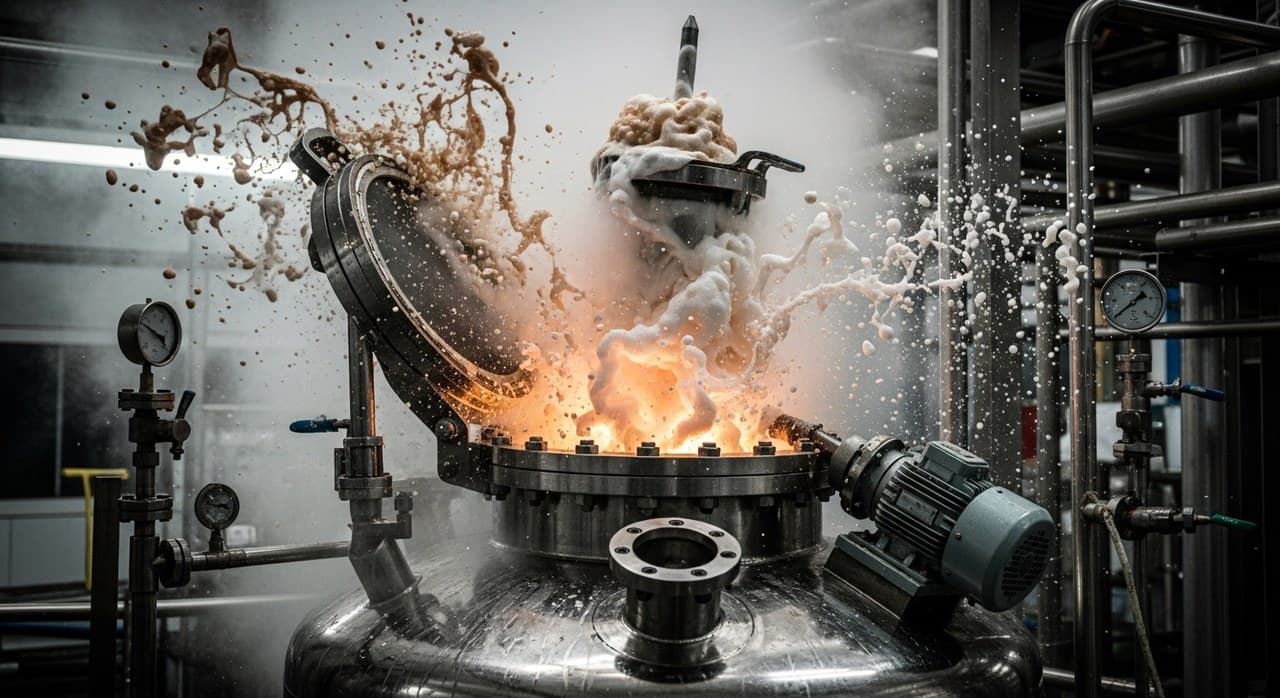
Reactive chemistry incidents such as the T2 Laboratories MCMT runaway of 2007 that killed four people, the MFG Chemical event of 2004, the Concept Sciences hydroxylamine event of 1999 and the precursor events at Dixie Crystals and Imperial Sugar have repeatedly shown that thermal hazard engineering must precede scale up rather than follow it. The Stoessel six class framework, set out in 1993 and codified in the CCPS Guidelines for Reactive Chemical Evaluation in Equipment, provides the dominant decision logic, which classifies a reaction by the relationship between the process temperature, the maximum temperature of the synthesis reaction, the maximum temperature of the technical equipment and the decomposition onset. Calorimetric methods cluster by sensitivity, with differential scanning calorimetry for milligram scale screening, accelerating rate calorimetry for adiabatic worst case characterisation, reaction calorimetry for isothermal kinetic resolution, and VSP2 and Phi Tec for the two phase vent sizing data the DIERS methodology needs. The hardest decisions, which our team makes with you, are the choice of calorimetric conditions across basket and cell and across adiabatic and near adiabatic, the criticality scoring under cooling failure and loss of stirring, and the translation of Class 4 to 6 findings into inherently safer process redesign rather than reliance on instrumented protection.
Reactive Chemistry and Thermal Hazard Engineering workflow
Review reaction chemistry, safety data, and literature to assess thermal hazard potential, plan calorimetric testing programme (DSC screening, ARC, RC1 kinetics, VSP / Phi Tec).
Execute DSC, ARC adiabatic characterisation, and RC1 isothermal calorimetry, extract Tonset, ΔHrxn, MTSR, Tmax, adiabatic dT/dt, and dP/dt for scale up evaluation.
Classify reaction criticality (Class I, VI) from the relationship between Tp, MTSR, Tmax of technical equipment, and decomposition onset (Td / TD24), identify Class 4, 6 redesign requirements.
Model adiabatic temperature rise (ΔTad) under cooling failure and loss of stirring, calculate time to maximum rate (TMR24) and onset of heat accumulation for emergency response basis.
Develop DIERS / Omega vent sizing basis for two phase reactive relief, calculate required orifice area and scale up vent dimensions, provide data for DIERS VSP2 or Phi Tec confirmation.
Develop safe operating envelope (Tp, dose rate, accumulation limit, cooling capacity), issue scale up safety basis document with calorimetric traceability and ISD redesign recommendations.
Every deliverable from basis to handover
Complete Reactive Chemistry and Thermal Hazard Engineering scope covering every calculation, drawing, specification, and construction support activity.
Outcomes of Reactive Chemistry and Thermal Hazard Engineering
- We prevent the runaway decomposition events of the T2 Labs and MFG class that drive reactive chemistry fatalities
- We establish your maximum temperature of synthesis reaction, time to maximum rate and self accelerating decomposition temperature with calorimetric evidence
- We identify the Stoessel Class 4 to 6 reactions that need inherently safer redesign before scale up
- We drive realistic relief, quench and emergency cooling design
- We satisfy the OSHA PSM 1910.119(d) process safety information requirement on reactive chemicals
- We withstand the EU Seveso III reactive hazard demonstration
- We provide the UN self accelerating decomposition temperature data for transport classification
- We align with ICH Q9 and Q11 quality risk management for your pharmaceutical reactive processes
- We define the safe operating envelope across process temperature, dose rate, cooling capacity and accumulation factor
- We anchor your control system and safety system trip and alarm setpoints in calorimetric reality
- We drive your scale up decisions with an engineering grade thermal margin
- We support a realistic emergency response procedure for a thermal upset
- We help you avoid the catastrophic loss of a batch, a reactor or a facility from a runaway event
- We sequence your inherently safer design investment ahead of expensive instrumented protection
- We reduce your R and D cycle time through earlier go and no go gating
- We document your reactive chemistry controls for your insurer to assess
Codes & standards we work to
Triggers that signal the need
Where Reactive Chemistry and Thermal Hazard Engineering applies
Tangible deliverables
- Thermal hazard evaluation report with the Stoessel class assignment
- Calorimetric data pack covering DSC, ARC, RC1 and VSP and Phi Tec as applicable
- Worksheets for the maximum temperature of synthesis reaction, time to maximum rate and self accelerating decomposition temperature
- Cooling failure and loss of stirring scenario analysis
- DIERS emergency vent sizing for two phase reactive flow
- Process operating envelope and accumulation factor limits
- Inherently safer design redesign recommendation covering semi batch dosing, continuous flow and solvent substitution
- Scale up safety basis document with calorimetric traceability
Send us the scope
We will scope Reactive Chemistry and Thermal Hazard Engineering against your site and come back with what it would take. Send us the process conditions, the equipment list and the stage the design has reached.