Indoor Air Quality and Ventilation Assessment
Indoor air quality surveys and local exhaust ventilation validation for healthy and productive workplaces
Indoor Air Quality
and Ventilation Assessment
Indoor air quality is easy to overlook precisely because its effects are diffuse, since headaches, fatigue, irritation, lost productivity and longer term health harm rarely point cleanly back to the air, and yet they are often driven by it. An assessment turns that vague complaint into a measured exposure picture, namely the contaminants actually present such as volatile organic compounds, respirable and fine particulates, carbon monoxide and carbon dioxide as ventilation markers and biological agents, and just as importantly whether the ventilation is delivering enough clean air to the right places to control them. Our team benchmarks conditions against the WHO, ASHRAE 62.1 and ACGIH guidance, distinguishes a source problem from a ventilation problem and specifies ventilation and source control upgrades aligned to ISO 16000, so that the intervention fixes the cause rather than masking the symptom.

Our implementation model
We fix the standards that apply to your site before we open at iaq complaint investigation & baseline, and we do not close at iaq monitoring & continuous improvement until they are met.
Investigate IAQ complaints per AIHA / NIOSH / EPA BAQ / WHO IAQ, symptom survey, occupant interview, walkthrough, establish baseline measurement plan per ASHRAE 62.1 / EN 13779.
Measure IAQ parameters, CO₂ (proxy for ventilation), CO, PM2.5 / PM10, total VOC (PID), formaldehyde, radon, mould (viable / total spore count), temperature, humidity, align with ASHRAE 62.1 / EU EN 16798.
Evaluate HVAC per ASHRAE Standard 62.1, outdoor air supply rate (cfm per person), filtration (MERV rating), economiser operation, controls, condensate management, maintenance frequency, align with LEED IEQ credits.
Design source control, VOC source removal (low emission materials per LEED / EU GreenBuilding), mould remediation (IICRC S520), CO source elimination (gas appliance), radon mitigation (sub slab depressurisation per EPA 625).
Design ventilation upgrade per ASHRAE 62.1 / 62.2, increase outdoor air, demand controlled ventilation per CO₂, MERV 13+ filtration, UVGI (ultraviolet germicidal irradiation) where applicable per ASHRAE 185.
Implement IAQ continuous monitoring (CO₂, PM, VOC) per LEED OM / WELL Building Standard, specify monthly review and corrective action workflow, align with HVAC commissioning and continuous commissioning.
Indoor Air Quality in full scope
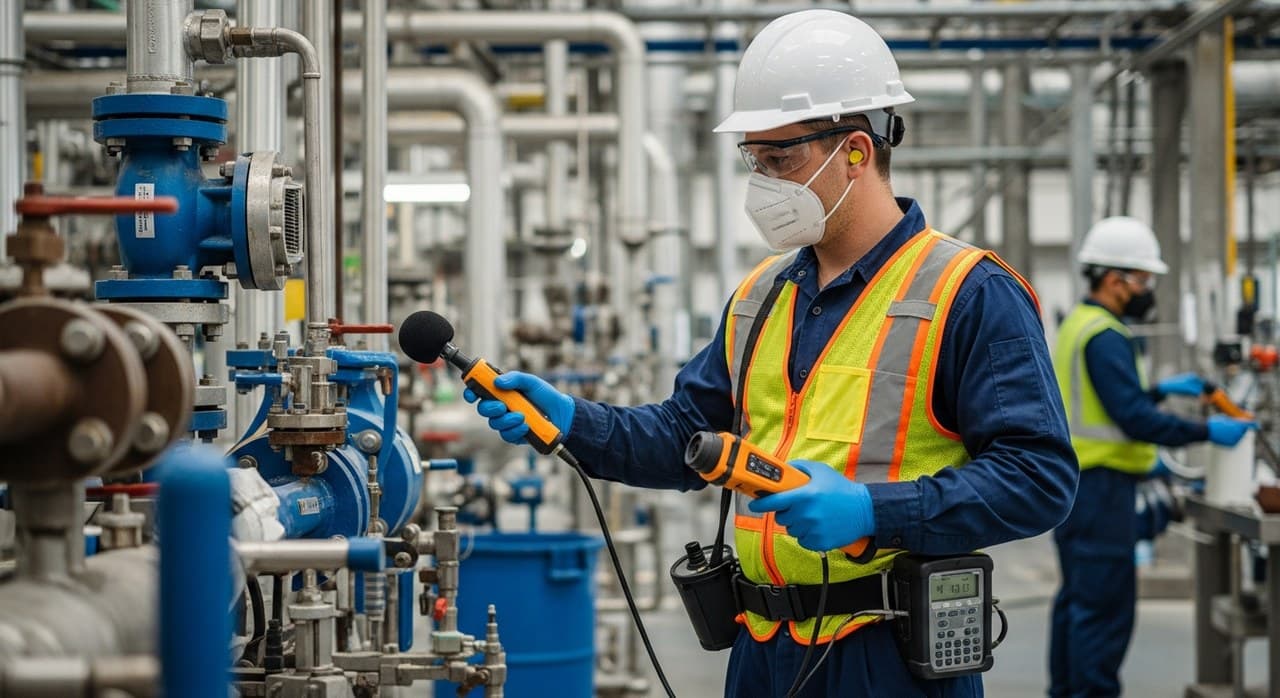
Value of Indoor Air Quality and Ventilation Assessment
- We cut respiratory and irritant exposure sharply
- We identify microbial contamination before it harms health
- We improve thermal comfort and worker wellbeing
- We strengthen the effectiveness of your emergency ventilation
- You maintain compliance with ASHRAE 62.1 and the WHO indoor air quality guidance
- You document the ISO 16000 sampling protocols
- You support ISO 45001 and green building certification
- You withstand worker complaint investigations
- We sharpen productivity through better indoor air quality
- We reduce the absenteeism linked to sick building syndrome
- We optimise your HVAC energy through outdoor air control
- We sharpen your local exhaust ventilation inspection regime
- We cut your HVAC energy through right sized ventilation
- We evidence the exposure controls a worker complaint would test
- We support the cost benefits of a green building rating
- You avoid the productivity loss that poor air brings
Codes & standards we work to
Triggers that signal the need
Where Indoor Air Quality and Ventilation Assessment applies
Tangible deliverables
- An indoor air quality survey report with the monitoring data
- A ventilation effectiveness assessment
- A local exhaust ventilation inspection record
- An indoor air quality improvement plan
- HVAC commissioning recommendations
- A KPI tracking framework
Send us the scope
We will scope Indoor Air Quality and Ventilation Assessment against your site and come back with what it would take. Tell us the site, the consents it holds and what it is measured against.